

Royal Niger Company Soldiery
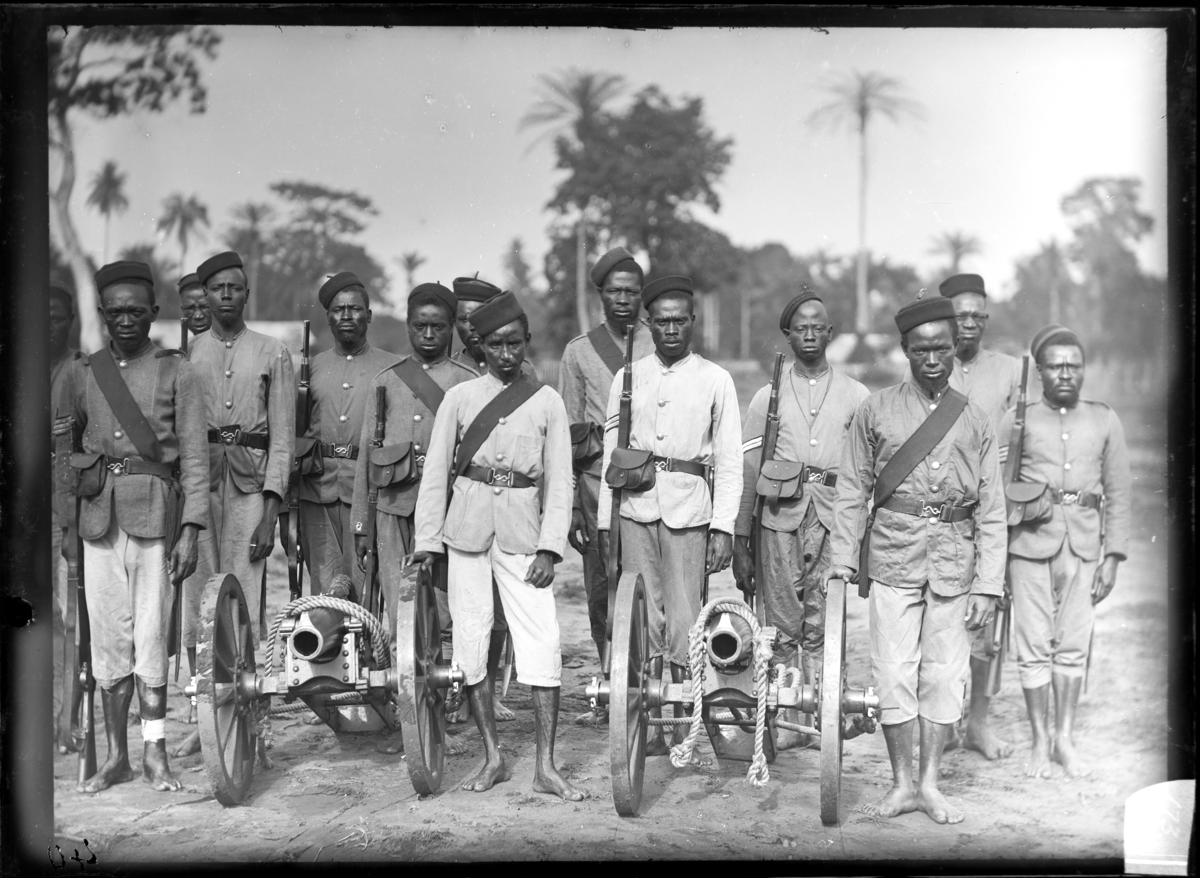
A photograph depicting a formation of approximately thirteen African males, identified in the source metadata as \"soldiery\", who are members of the Royal Niger Constabulary. The individuals are arranged in two rows behind two small-bore artillery pieces with spoked wooden wheels. The subjects wear dark cylindrical caps, high-collared button-down tunics, and leather belts with equipment pouches. Several men hold rifles vertically at their sides. The setting is an open, flat area with tropical vegetation, including palm trees, in the background. This image is part of the Crosse Collection at the Museum of Archaeology and Anthropology, Cambridge, documented as having been taken between 1886 and 1895.
Community Notes

Onyeka Nwokike
Oct 14, 2026
The men depicted are members of the Royal Niger Constabulary (RNC), a military force established by the Royal Niger Company in 1886 to protect company stations and enforce administrative control along the Niger River. As described in How the Royal Niger Company Constabulary Turned River Commerce into Authority, the RNC represents the intertwining of governance, commerce, and armed force during the period preceding direct colonial rule. Their attire, characterized by white or khaki tunics and dark pillbox caps worn without footwear, aligns with contemporary descriptions of the unit's standard dress (Soldiers of the Royal Niger Company).
Onyeka Nwokike
Oct 14, 2026
The photograph was taken by Dr. William Henry Crosse (1859–1903), who served as the Principal Medical Officer for the Royal Niger Company from 1886 to 1895. According to an obituary found via JSTOR, Crosse died in London at the age of 44 due to an illness contracted during his time in Africa.
Onyeka Nwokike
Oct 14, 2026
This image is part of a collection at the Museum of Archaeology and Anthropology (MAA) in Cambridge. The identity of the photographer was previously misrecorded as Ernest Balfour Haddon, but was later corrected to Crosse after matching the negative to a series of other negatives and lanternslides. The MAA indicates that these photographs may have been donated by Rev. Charles Henry Robinson, who used several of Crosse's images in his 1900 book, Nigeria: Our Latest Protectorate.
Log in to add context.
Explore Further
Discover related books and stories to deepen your understanding.

Trade Winds on the Niger: Saga of the Royal Niger …
By Geoffrey L. Baker

The Rise of British Colonialism in Southern Nigeria, 1700-1900: A …
By Kalu E. Ume
Encyclopaedia of Igbo Artefacts
By Dandy Ahaoma Ahuruonye

The Gospel on the Banks of the Niger: Journals and …
By Samuel Crowther and John Christopher Taylor

Chike and the River
By Chinua Achebe

Under the Udala Trees
By Chinelo Okparanta

Igbo Art And Culture: And Other Essays
By Simon Ottenberg

Anthropological Report on the Ibo-Speaking Peoples of Nigeria: Law and …
By Northcote Thomas

Art of Eastern Nigeria
By G.I. Jones
You May Also Like
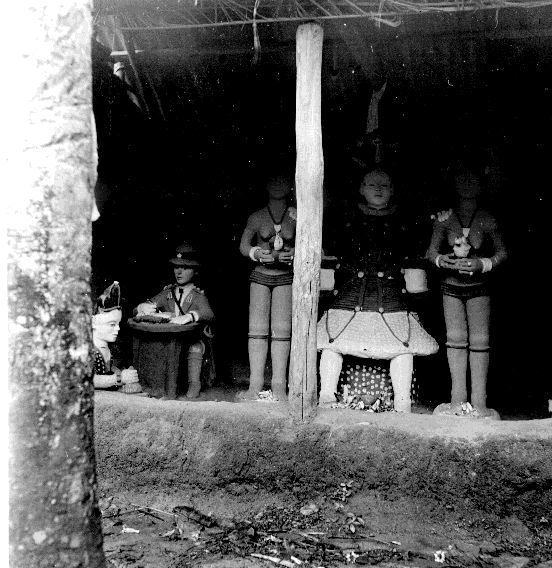
Mud Figures of Chief, Attendants, and Commissioner of Police
By G.I. Jones
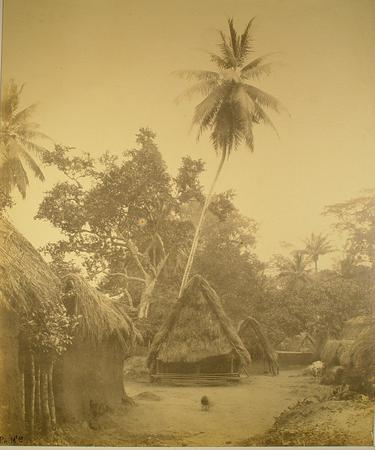
Interior View of a Chief's Compound
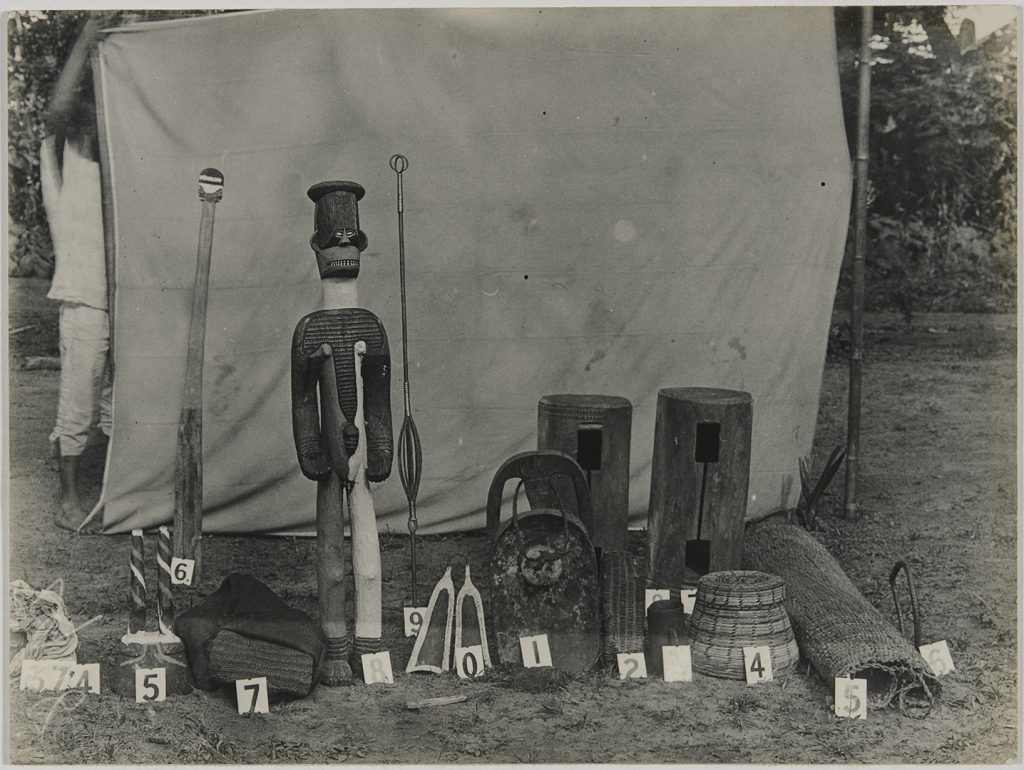
Northcote Thomas Collection: Awgbu Artifacts
By Northcote Thomas
Igbo bu Igbo (Great Igbo)
By Northcote Thomas
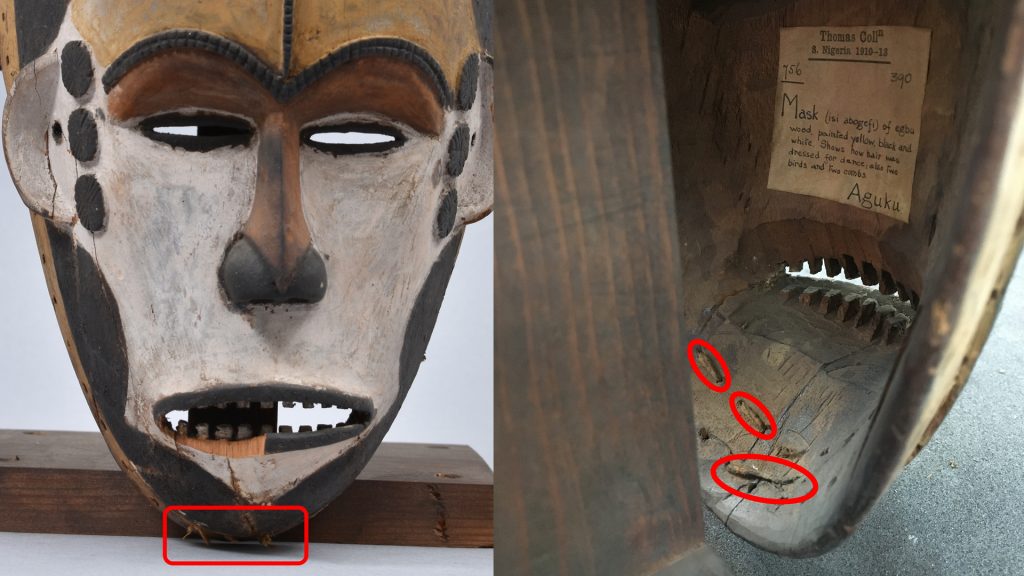
Maiden Spirit Mask (Isi abogefi)
By Northcote Thomas
Conversation in Igbo between John and Nwile
By Northcote Thomas
Face Mask Documentation Photograph
By G.I. Jones
Pyramids at the Nsude Village Shrine, Abaja Igbo, Northern Igbo
By G.I. Jones
Alose Shrine Figure
By G.I. Jones
No comments yet. Be the first to share your thoughts!