
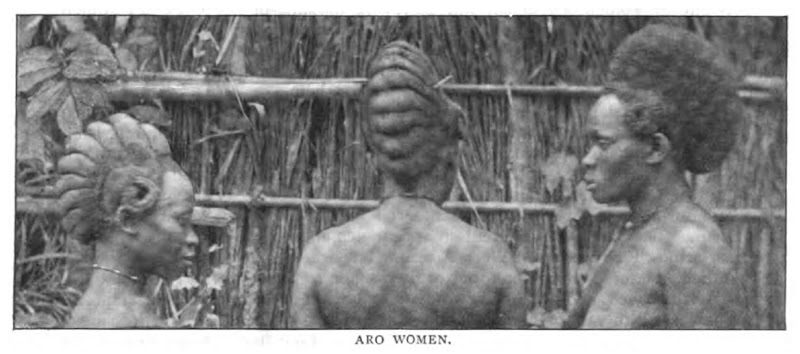
Ohafia Women with Traditional Long Braids
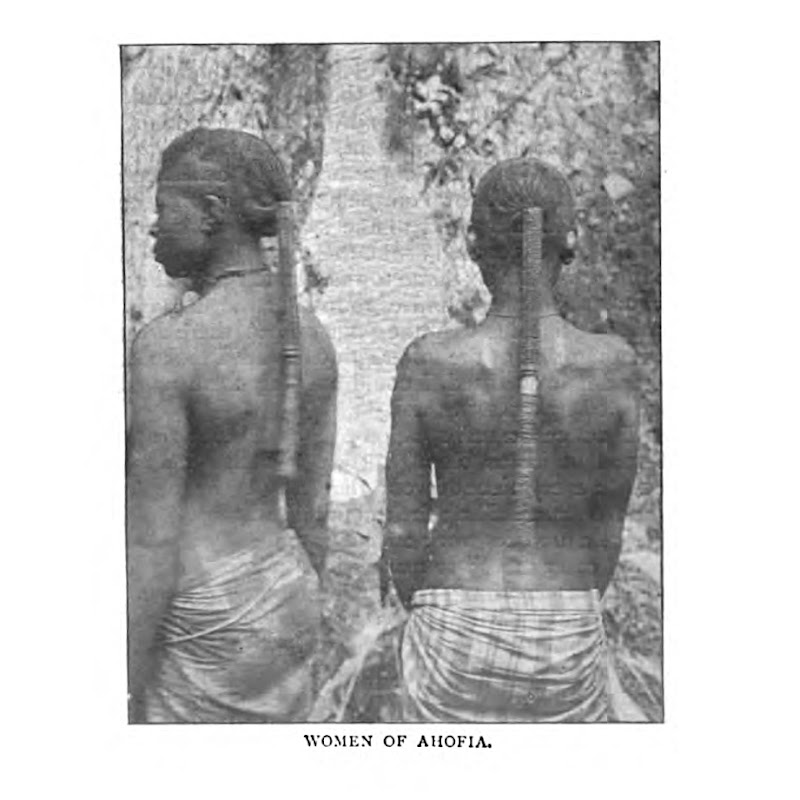
A photograph depicting two Ohafia women from a posterior perspective, showing traditional long braids that extend from the head down the spinal column. The subjects have bare upper torsos and wear light-colored fabric wraps around the hips. The image originates from The Women's Missionary Magazine of the United Free Church of Scotland, 1904. This cultural practice is associated with Ohafia, where historical records and folktales mention women warriors known as dike nwaàmị̀.
Community Notes

Onyeka Nwokike
May 12, 2026
In early 20th-century Ohafia, the long braids extending down the back seen in this photograph were a distinctive and fashionable style. The society's structure is characterized by the traditional passing of farmland rights through the maternal line. While the Ekpè society was typically exclusive to men, historical records indicate that some women were occasionally admitted.
Onyeka Nwokike
May 12, 2026
Ohafia folklore and history record the existence of women warriors known as dike nwaàmị̀ who played roles in restoring family honor. As detailed in Dike Nwaàmị̀ Ọ̀hafị̄ā, Nne Mgbaafo is a legendary figure who ventured into Ibibio territory in war gear to rescue her kidnapped husband. Another figure, Inyan Olugu, secured her household's status by killing five enemies with her husband's gun after he was mocked as an onye ụjọ (coward) for failing to take heads in battle. She presented these heads to the ikòrò, an ancestral slit drum used for sacrifices.
Onyeka Nwokike
May 12, 2026
Nne Uko Uma Awa of Akanu Ohafia is a notable figure who led girls in a ritual hunt normally reserved for boys following divine instruction. She adopted male warrior attire, including the òkpu agụ (leopard cap), performed the iri agha (war dance), and was admitted into the Ekpè society.
Log in to add context.
Explore Further
Discover related books and stories to deepen your understanding.

Ohaffia: A Matrilineal Ibo People
By Philip O. Nsugbe
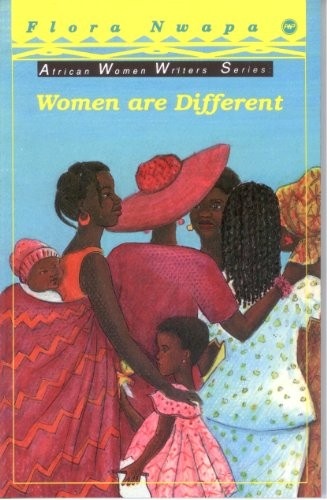
Women Are Different
By Flora Nwapa

Never Again
By Flora Nwapa

The Thing Around Your Neck
By Chimamanda Ngozi Adichie

Among the Ibos of Nigeria
By G.T. Basden

Wives at War
By Flora Nwapa
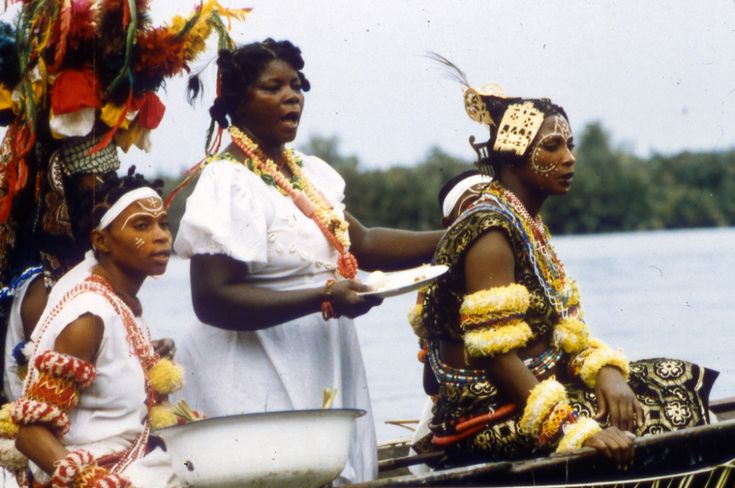
Mammy Water in Igbo culture
By Sabine Jell-Bahlsen

Americanah
By Chimamanda Ngozi Adichie

Nri Warriors of Peace
By Chikodi Añunobi
You May Also Like
An Ekpe Masquerader in Uzuakoli
By G.I. Jones
Excerpt from Anthropological Report on the Ibo-speaking Peoples of Nigeria
By Northcote Thomas
Ojo Onu Masquerade in Amuda Village
By G.I. Jones
Maiden Spirit Mask (Isi abogefi)
By Northcote Thomas
Portrait of a Woman with Neck Markings
By William Henry Crosse
Uli Body Painting in Awka
By Winifred Beatrice Yeatman
European Men and African Man at a Royal Niger Company …
By William Henry Crosse
Settlement along the Niger River
By William Henry Crosse
Portrait of an Igbo Man
By G.I. Jones
No comments yet. Be the first to share your thoughts!