
Anthropological Report on the Ibo-Speaking Peoples of Nigeria: Law and Custom of the Ibo of the Asaba District, S. Nigeria
by Northcote Thomas

Book Author / Creator
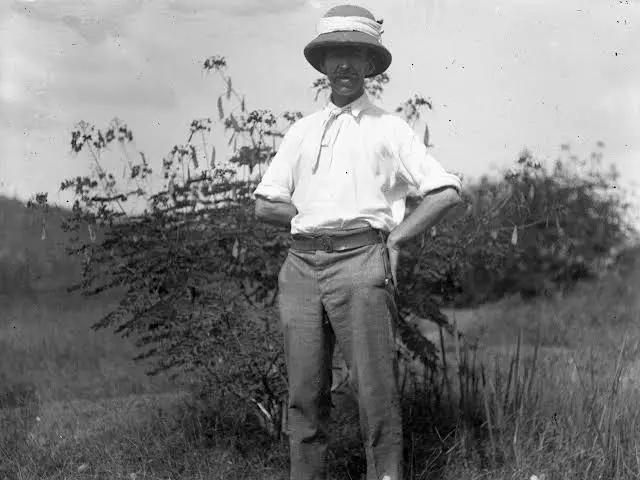
Northcote Whitridge Thomas (1868–1936) was a British anthropologist and the first person to be appointed as a Government Anthropologist by the Colonial Office. From 1909 …
Read full bio →A Window into Western Igbo History
This volume, Part IV of Northcote Whitridge Thomas's extensive Anthropological Report, focuses specifically on the 'Asaba District'—an area covering the Western Igbo communities (Anioma) west of the Niger River. Published originally in 1914, this text is a crucial primary source for understanding the distinct cultural and legal identity of the Western Igbo, which differs in significant ways from the Eastern Igbo traditions documented in earlier volumes. Thomas, the first Government Anthropologist appointed by the British colonial administration, was tasked with recording these customs to aid colonial officers in ruling 'correctly,' but his work has inadvertently preserved a treasure trove of pre-colonial history.
Governance and Title Systems
Thomas provides a detailed examination of the socio-political structure of the Asaba people. Unlike the more republican nature of some Eastern Igbo groups, the Western Igbo often exhibited more centralized hierarchies influenced by their neighbors, the Benin Kingdom. The book explores the complex title systems, such as the Asagba and the Alo titles, explaining the costs, rituals, and political privileges associated with them. He documents the role of the Diokpa (eldest male) and the council of elders in legislative and judicial matters, offering case studies of how disputes were resolved before British courts imposed their own systems.
Marriage, Land, and Inheritance
A major focus of the report is 'Law and Custom.' Thomas meticulously records the laws governing land tenure—who owned the land, how it was leased, and the rights of the community versus the individual. He details the marriage customs of the district, including the bride price negotiations and the specific rights of widows. The inheritance laws are also scrutinized, showing how property was passed down through the male line and the specific provisions made for female family members. These sections are particularly valuable for legal historians and families tracing their genealogical rights.
The Colonial Lens and Modern value
While the text is written with the detached, sometimes dry tone of a colonial administrator, and includes the controversial 'physical type' photography (anthropometric portraits) typical of the era's scientific racism, the ethnographic data remains undeniably valuable. Thomas recorded the names of his informants, the specific towns visited (like Ibusa, Ogwashi-Uku, and Asaba), and the local terminology for legal concepts. Recent scholarship, such as the 'Re:Entanglements' project, has revisited Thomas's work, highlighting its importance as an archive of Igbo heritage that allows modern descendants to 'reverse engineer' their history from the colonial gaze.


You May Also Like
Lake Goddess
By Flora Nwapa
Dear Ijeawele, or A Feminist Manifesto in Fifteen Suggestions
By Chimamanda Ngozi Adichie
Toads for Supper
By Vincent Chukwuemeka Ike
Juo Obinna
By Tony Uchenna Ubesie
Encyclopaedia of Igbo Artefacts
By Dandy Ahaoma Ahuruonye

Binti
By Nnedi Okorafor
Sanctificum
By Christopher Abani
The Agwu deity in Igbo religion
By Jude C. U. Aguwa
Political Organization in Nigeria Since the Late Stone Age
By John Oriji