

Family Group Along the Niger River
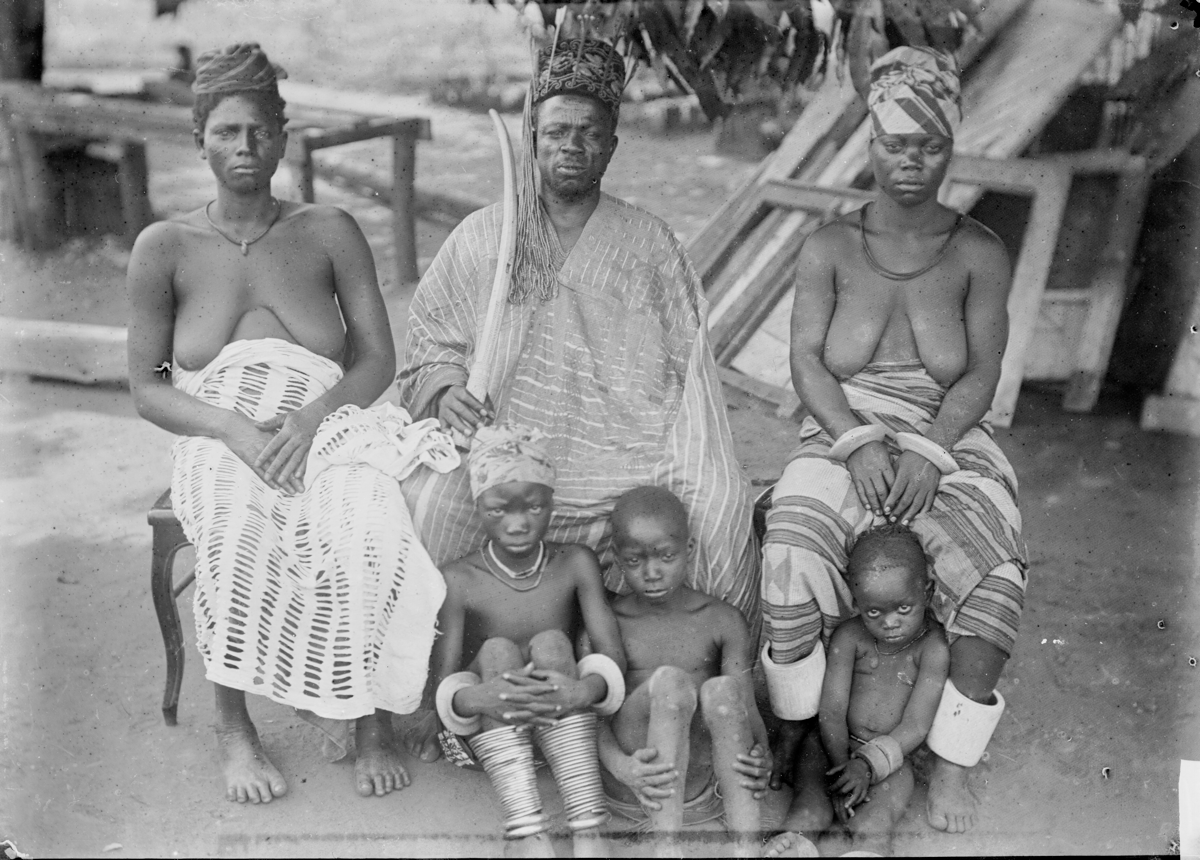
A monochromatic photograph depicting a family group of six individuals posed outdoors on an earthen surface. A seated adult male is positioned in the center, wearing a patterned cap with vertical decorative elements, a striped long-sleeved tunic, and holding a curved object with suspended filaments. He is flanked by two adult females; the woman on the left wears a fabric turban and a light-colored textile with a lattice pattern, while the woman on the right wears a striped fabric wrap and thick ivory ankle rings. Three bare-chested children are seated in the foreground, with the leftmost child wearing several concentric ring-like bands around the calves. The image, captured between 1886 and 1895 by Dr. William Henry Crosse for the Royal Niger Company, documents social dynamics and material culture along the Niger River.
Community Notes

Onyeka Nwokike
Oct 16, 2026
The photograph was originally cataloged as part of the Jones Collection due to handwriting on the storage box, but it was later reassigned to the Crosse Collection after the negative was matched to a known series. It is believed the image may have been donated to the Museum of Archaeology and Anthropology by Rev. Charles Henry Robinson, who utilized several of Crosse's photographs in his 1900 publication, Nigeria: Our Latest Protectorate.
Onyeka Nwokike
Oct 16, 2026
The subjects in this portrait are identified as being from the Igbo area along the Niger River. According to the Igbo Archives, the metallic concentric rings worn around the calves of the leftmost child are known as Nja.
Log in to add context.
Explore Further
Discover related books and stories to deepen your understanding.

Trade Winds on the Niger: Saga of the Royal Niger …
By Geoffrey L. Baker

The Rise of British Colonialism in Southern Nigeria, 1700-1900: A …
By Kalu E. Ume

The Gospel on the Banks of the Niger: Journals and …
By Samuel Crowther and John Christopher Taylor

Chike and the River
By Chinua Achebe

Igbo Art And Culture: And Other Essays
By Simon Ottenberg

The House of Skulls: A Symbol of Warfare & Diplomacy …
By Nkparom C. Ejituwu and Stanley I. Okoroafor

The Thing Around Your Neck
By Chimamanda Ngozi Adichie

The Igbo and their neighbours
By A. E. Afigbo

The Asaba Massacre: Trauma, Memory, and the Nigerian Civil War
By S. Elizabeth Bird and Fraser M. Ottanelli
You May Also Like
Market Scene with Metal Goods
Mau Ghost Face Mask
By G.I. Jones
Carved Wooden Ceremonial Board Staff
By Kenneth C. Murray
Agbogho Mmo Maiden Spirit Mask
By Edward Harland Duckworth
Royal Niger Company Vessel on the Niger River
By William Henry Crosse
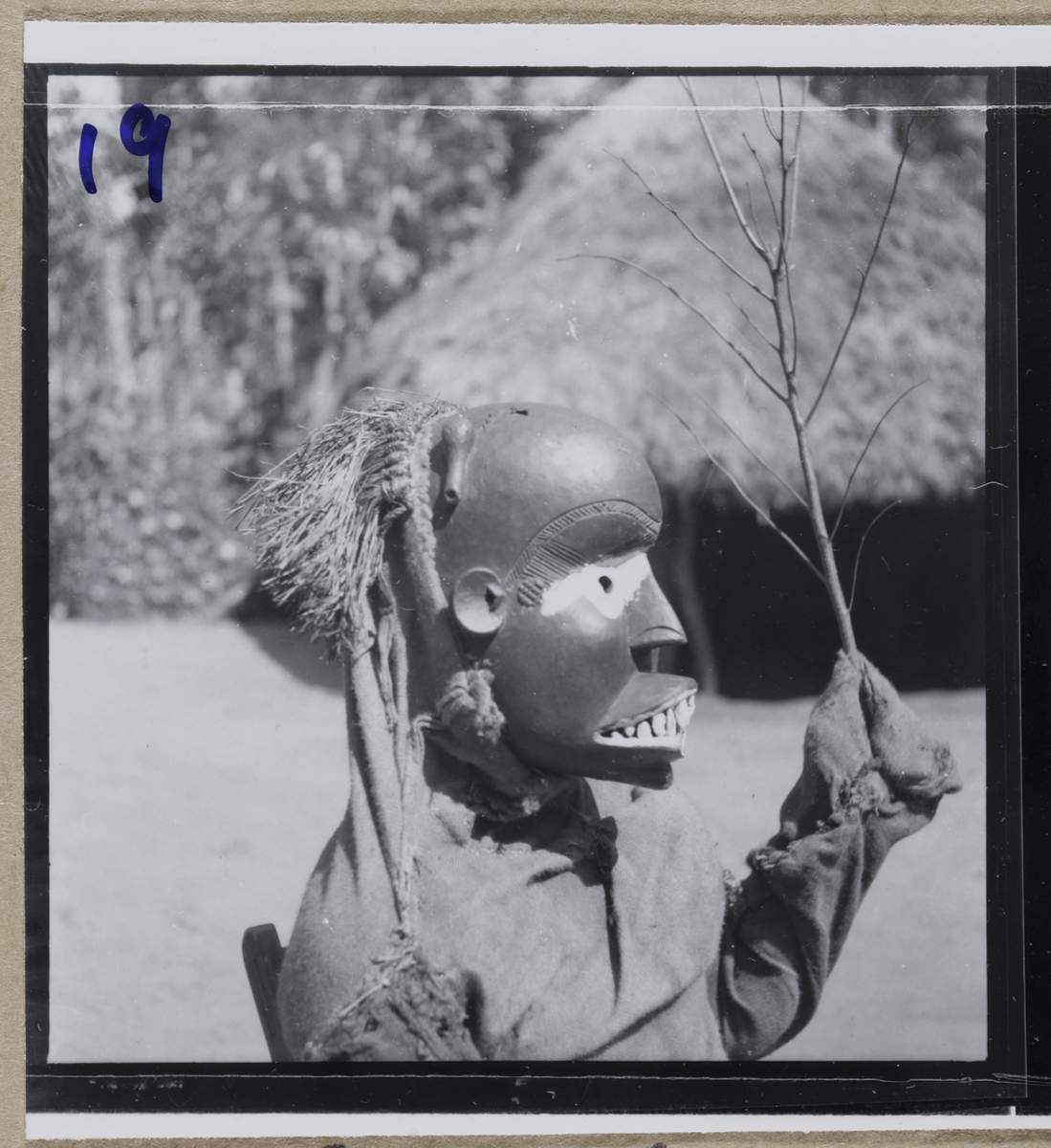
Ogbugulu Mau (Ghost) Masquerade: Iro Ekpetu (Merciless)
By G.I. Jones
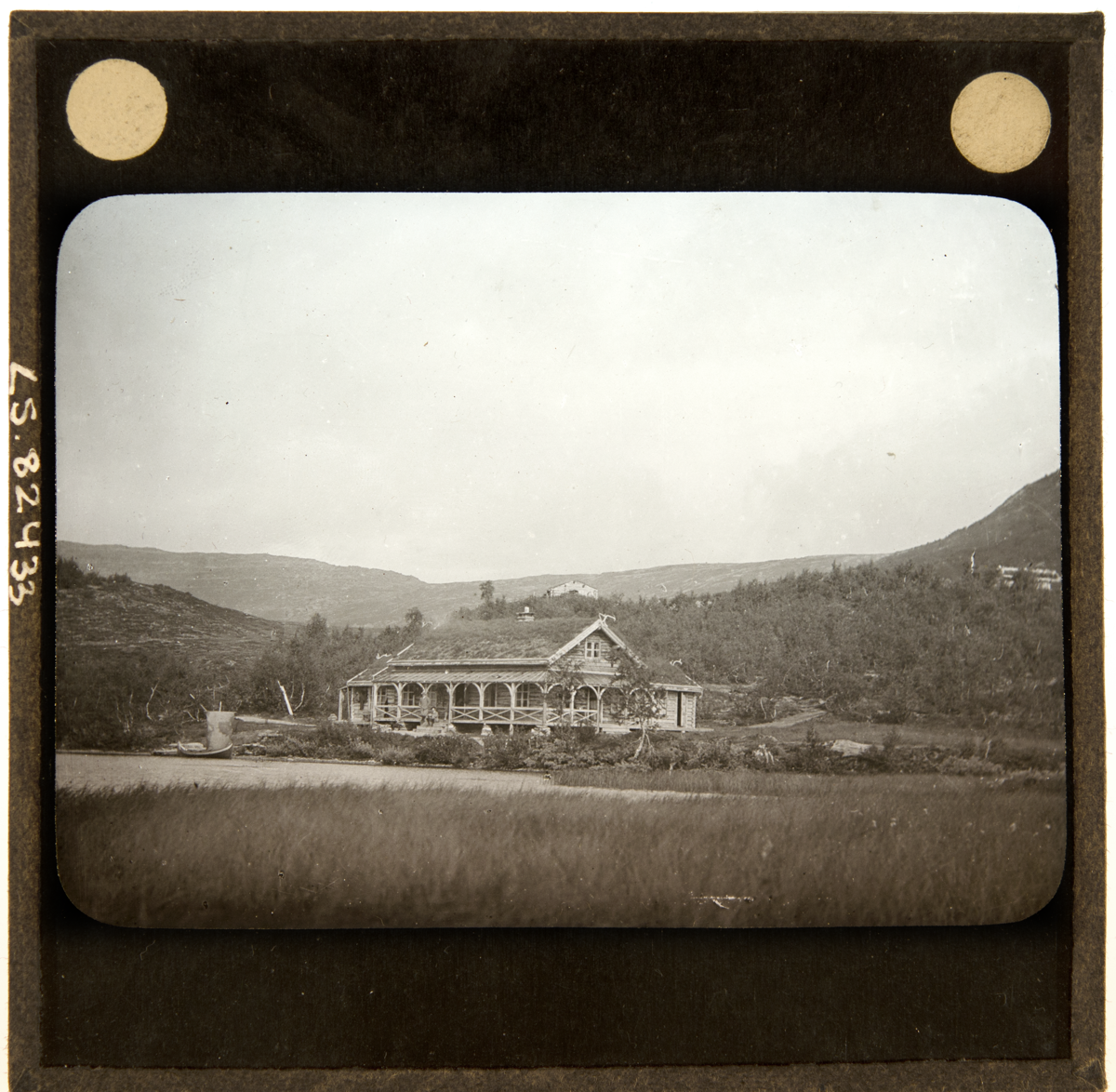
Building on the Banks of the Niger River
By William Henry Crosse
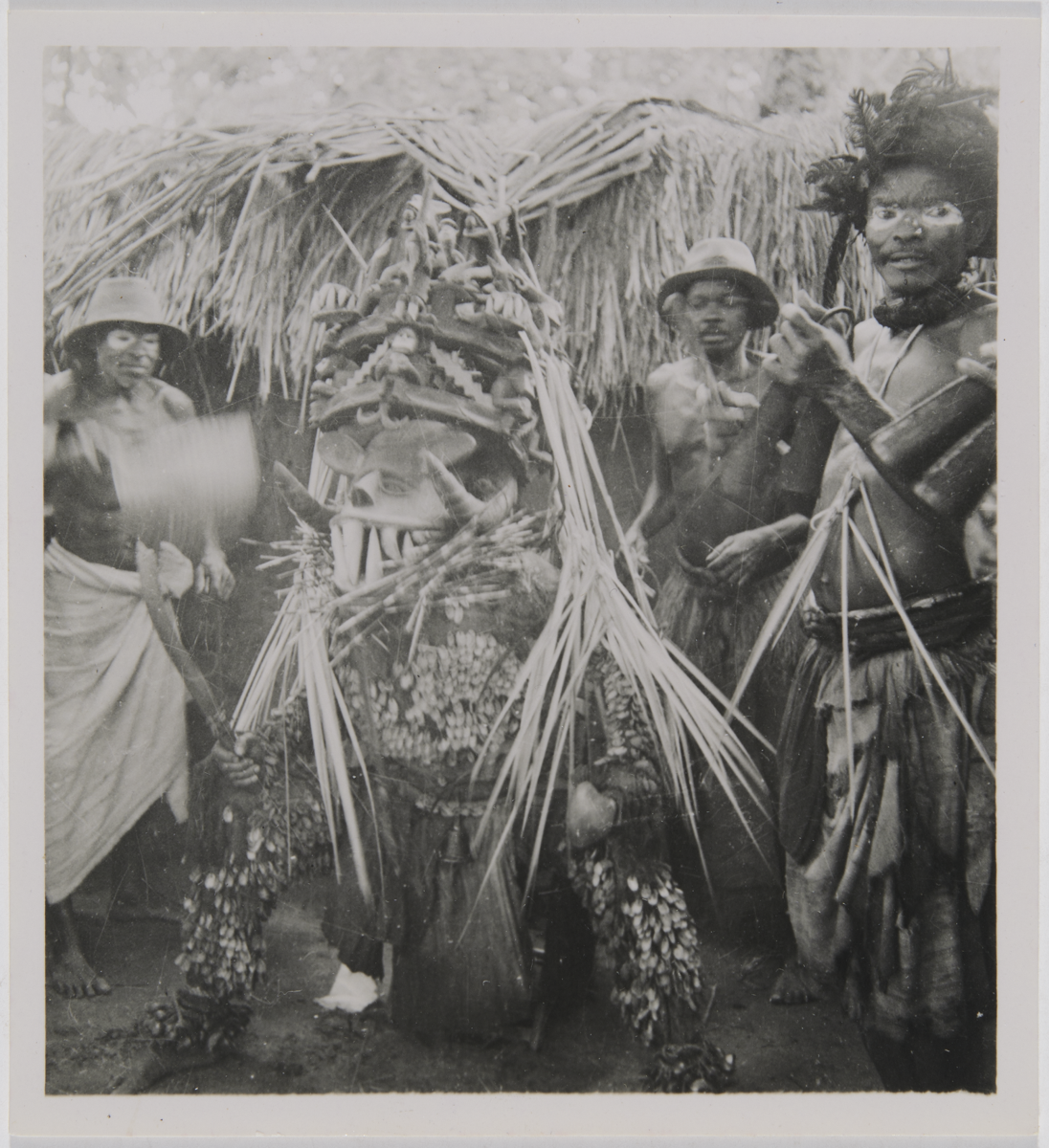
Mgbedike Masquerade from Onitsha Province
By G.I. Jones
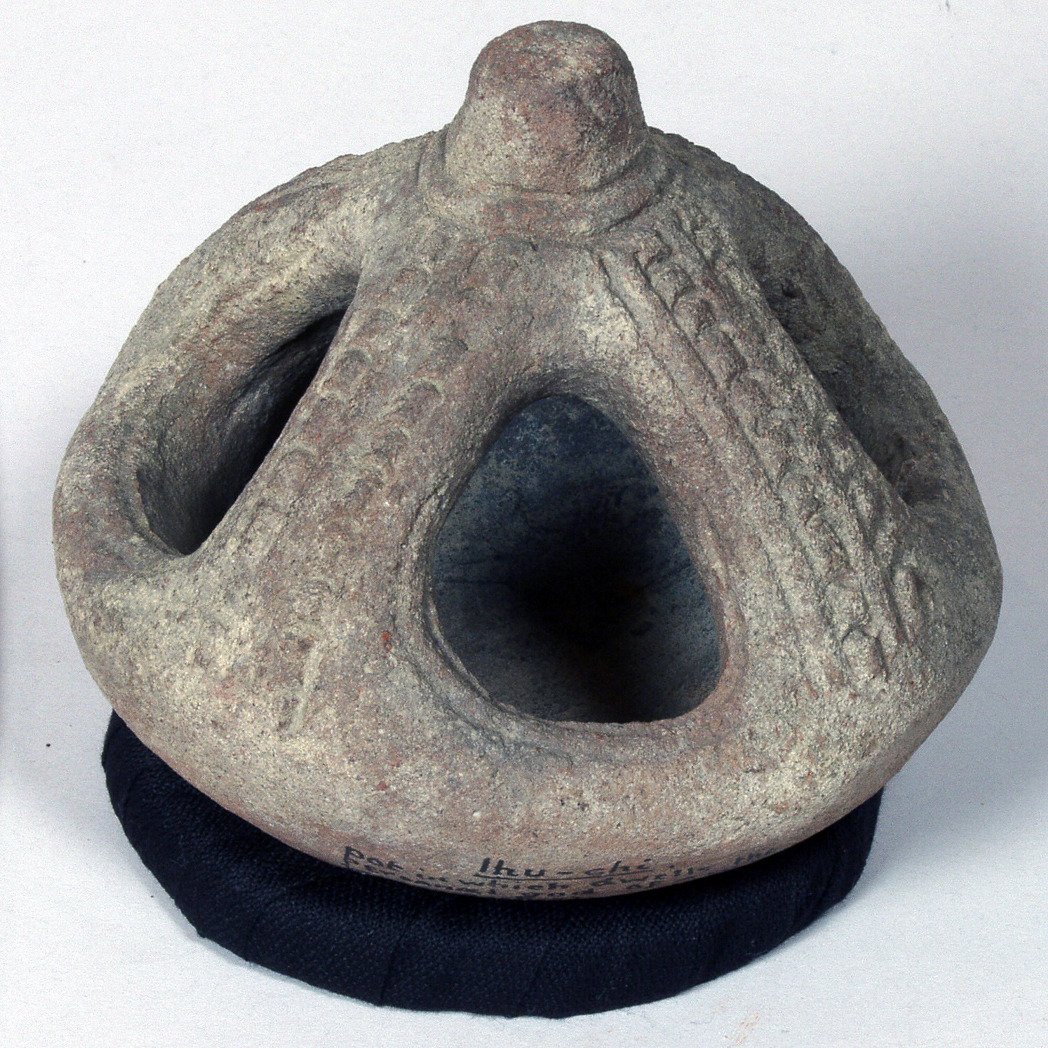
Pot believed to hold the personal spirit (chi)
By Percy Amaury Talbot
No comments yet. Be the first to share your thoughts!