
Uli Body Painting in Awka
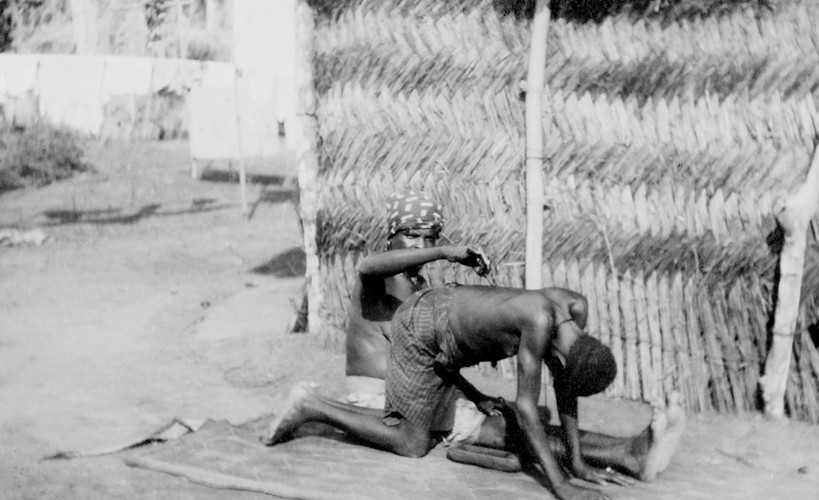
A photograph depicting a woman applying paint to the back of a man who is kneeling on all fours on a woven mat. The woman wears a patterned head covering and uses a small handheld tool to apply the designs. The man is bare-chested and wears a patterned waist wrap. The scene takes place on a sandy surface next to a structure made of woven organic material and a wooden support post. This image documents the practice of Uli body art in Awka, as collected by Winifred Beatrice Yeatman.
Community Notes

Onyeka Nwokike
Jul 27, 2026
Ùlì art is used for decorative, social, spiritual, or medicinal purposes. The designs are created using a dye extracted from plants known collectively as ùlì. While often used to decorate women's bodies, the art is also applied in larger forms to the walls of clay houses. The practice typically utilizes small, thin applicator tools to transfer the plant-based dye to the skin.
Onyeka Nwokike
Jul 27, 2026
Winifred Beatrice Yeatman was an ethnographic and medical artifact collector active in Nigeria during the 1930s, focusing her efforts on the Onitsha Province, including Awka and Abiriba. Her contributions to the Pitt Rivers Museum Body Arts | Scarification in Nigeria include items collected in 1934 and donated via the Wellcome Historical Medical Museum in 1942. She also donated materials and tools related to Uli art directly to the museum in 1975.
Onyeka Nwokike
Jul 27, 2026
During the 1930s, Awka served as a prominent center for Igbo craftsmanship and cultural practices. The use of woven organic fibers, such as palm fronds or reeds, for mats and structural walls was characteristic of the local architecture of the period. This photograph is part of a broader historical effort to document both temporary body arts, like Uli, and permanent body arts, such as scarification, within the Onitsha and Awka regions.
Onyeka Nwokike
Jul 27, 2026
The dye used in Ùlì art is extracted from several plant species, most commonly from a fruit pod, the bean of a second species, or the crushed root of a third. The most common dye, Ùlì Oba, is obtained by squeezing the juice of the fruit into a bowl. According to Pitt Rivers Museum Body Arts | Uli materials and tools, the designs initially appear green but turn black as they react with body heat, typically lasting for about one week.
Onyeka Nwokike
Jul 27, 2026
The precise application of these designs is achieved using a thin sliver of wood or a specially forged iron tool. This practice was often a professional endeavor, as some collectors in the 1930s noted that Ùlì was usually performed by women who earned a living through this work, as detailed in Pitt Rivers Museum Body Arts | Uli materials and tools.
Log in to add context.
Explore Further
Discover related books and stories to deepen your understanding.

Igbo Arts: Community and Cosmos
By Herbert M. Cole and Chike G. Aniakor

Anthropological Report on the Ibo-Speaking Peoples of Nigeria, Vol. 2: …
By Northcote Thomas
A Man of the People
By Chinua Achebe

Efuru
By Flora Nwapa

Art of Eastern Nigeria
By G.I. Jones

THE INDIGENOUS PEOPLE OF IGBOLAND: A Captivating Guide to the …
By Vivian Chibuife

Second Class Citizen
By Buchi Emecheta

IKENGA QUEST: One Man's Quest for His African Heritage
By Gerald Oluchi Ibe

One Is Enough
By Flora Nwapa
Drums, Dust, and Departure: Cultural Meanings of Death among the …
By Dandy Ahaoma Ahuruonye
You May Also Like
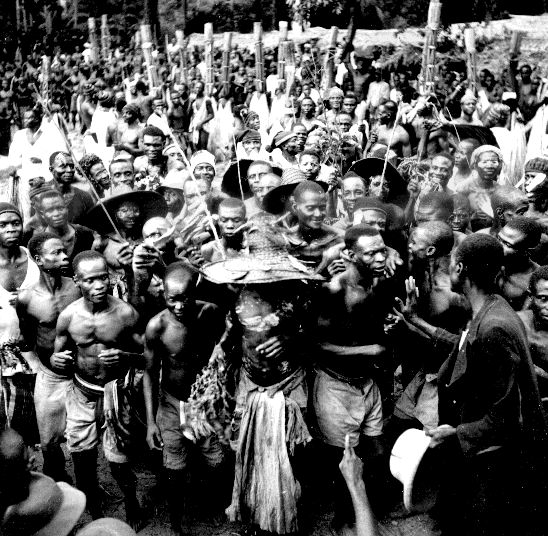
Group Leading Masks for Boys Initiation
By G.I. Jones
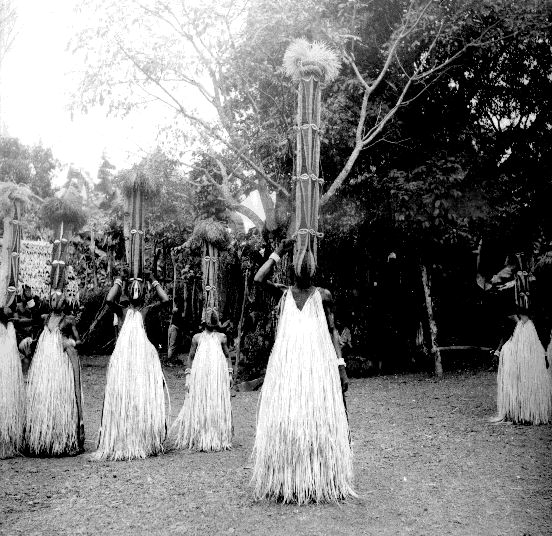
Dancing Initiation Masks, Boys Initiation
By G.I. Jones
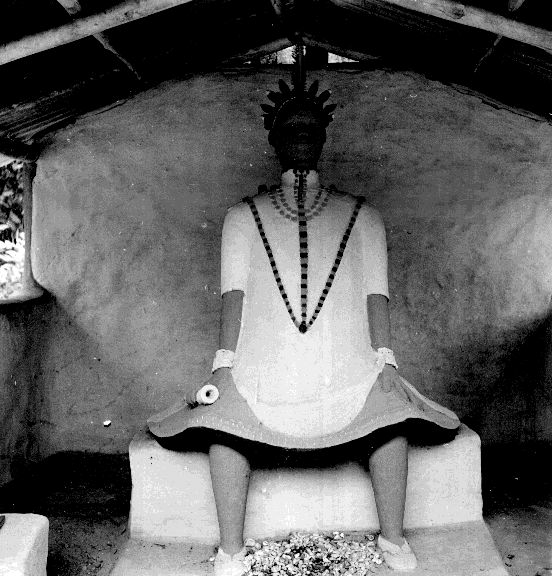
Figure of Chief North Ika
By G.I. Jones
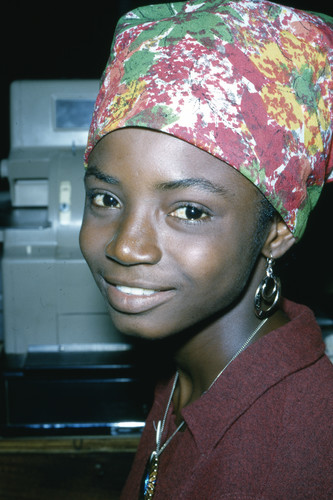
Portrait of an Igbo Woman Clerk in Maiduguri
By Edward Shearman Ross
Igbo bu Igbo (Great Igbo)
By Northcote Thomas
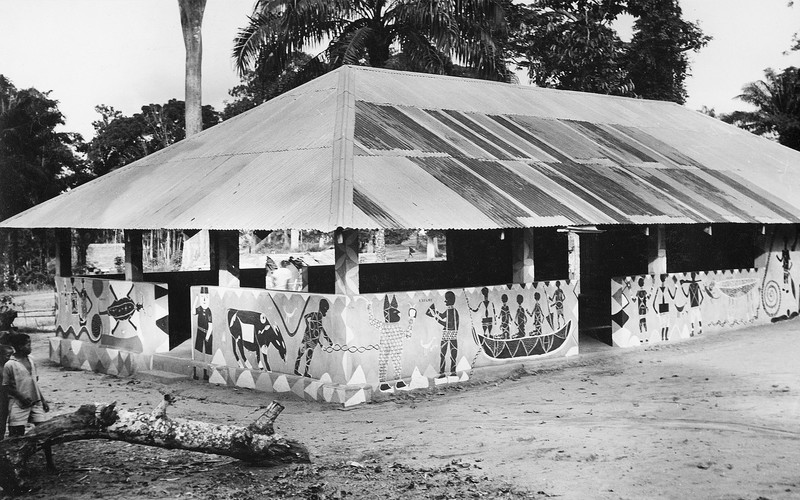
Painted Courthouse at Nri
By Edward Harland Duckworth
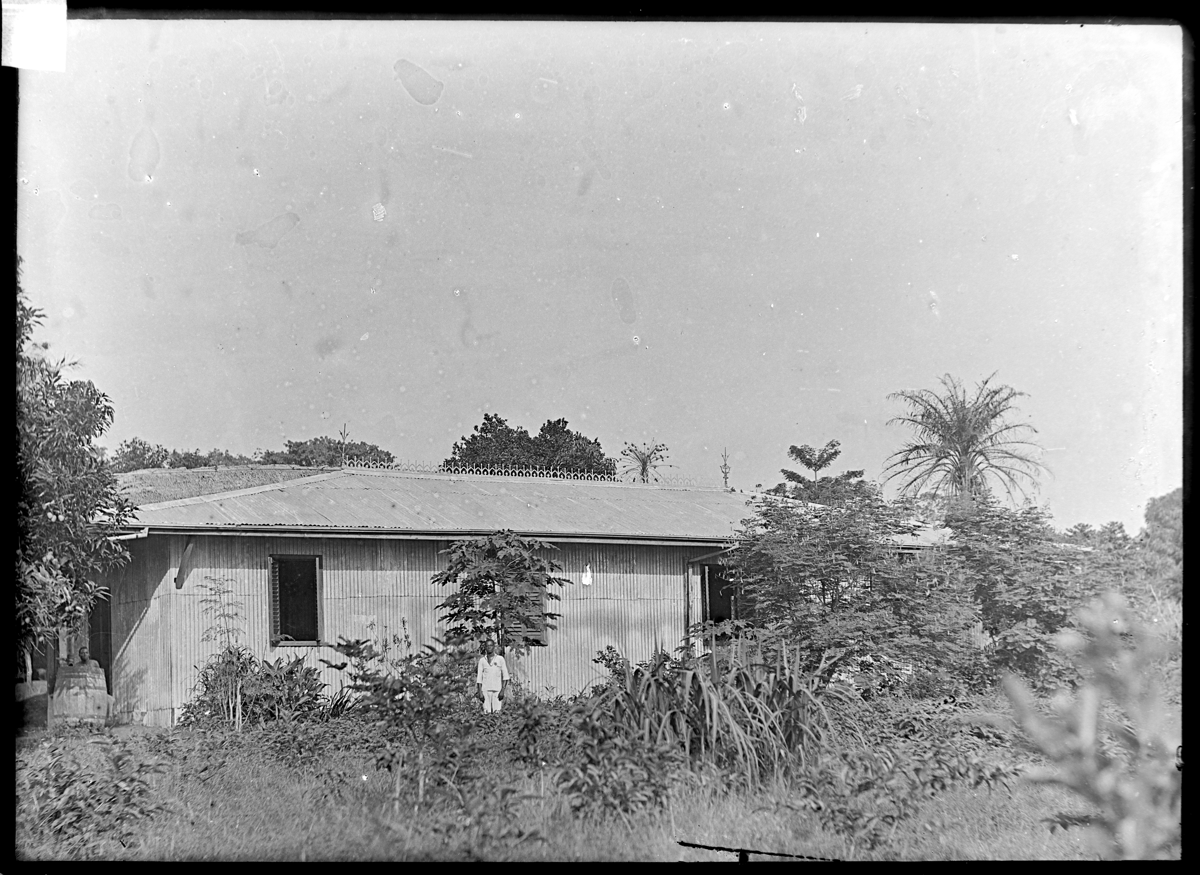
Corrugated Metal Building and Individual along the Niger River
By William Henry Crosse

Ohaffia Masquerader in Okwanku Performance, Akanu Village
By G.I. Jones

An Igbo couple from Asaba
No comments yet. Be the first to share your thoughts!