
Ogbugulu Mau Mask
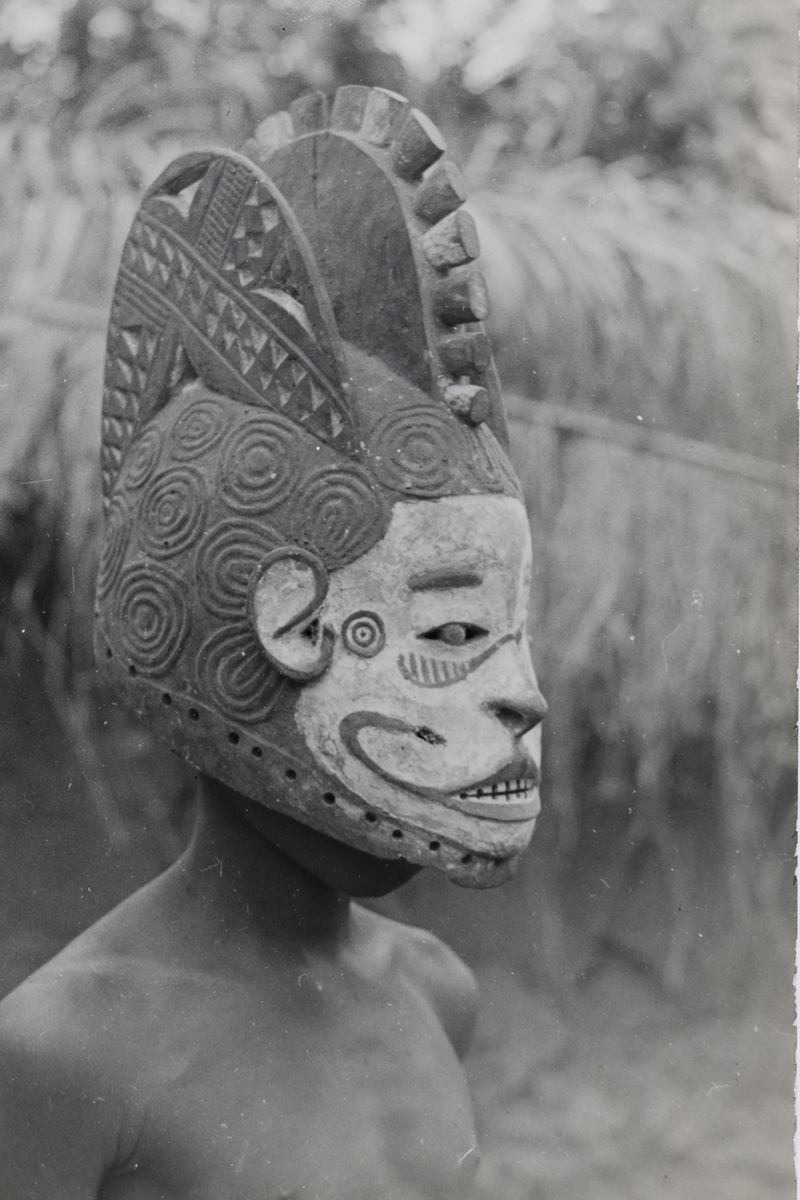
A photograph depicting a side view of an Ogbugulu Mau helmet mask modelled by a male subject. The face of the mask is painted white with darker pigments accentuating the eyebrows, eyes, mouth, hair, and crested structure. The eyes are small slits with rounded pupils, and the mouth is open to reveal teeth. The cheek and the side of the face feature circular designs. The top of the mask consists of an elaborate crested coiffure with painted pegs in the central arched area and incised curls representing hair. The mask is extended forward at an angle, and holes used for sewing fabric are visible along the edge. The subject is shirtless and not wearing a costume, indicating he is not performing. The background shows a thatched area and trees.
Community Notes

Onyeka Nwokike
Sep 20, 2026
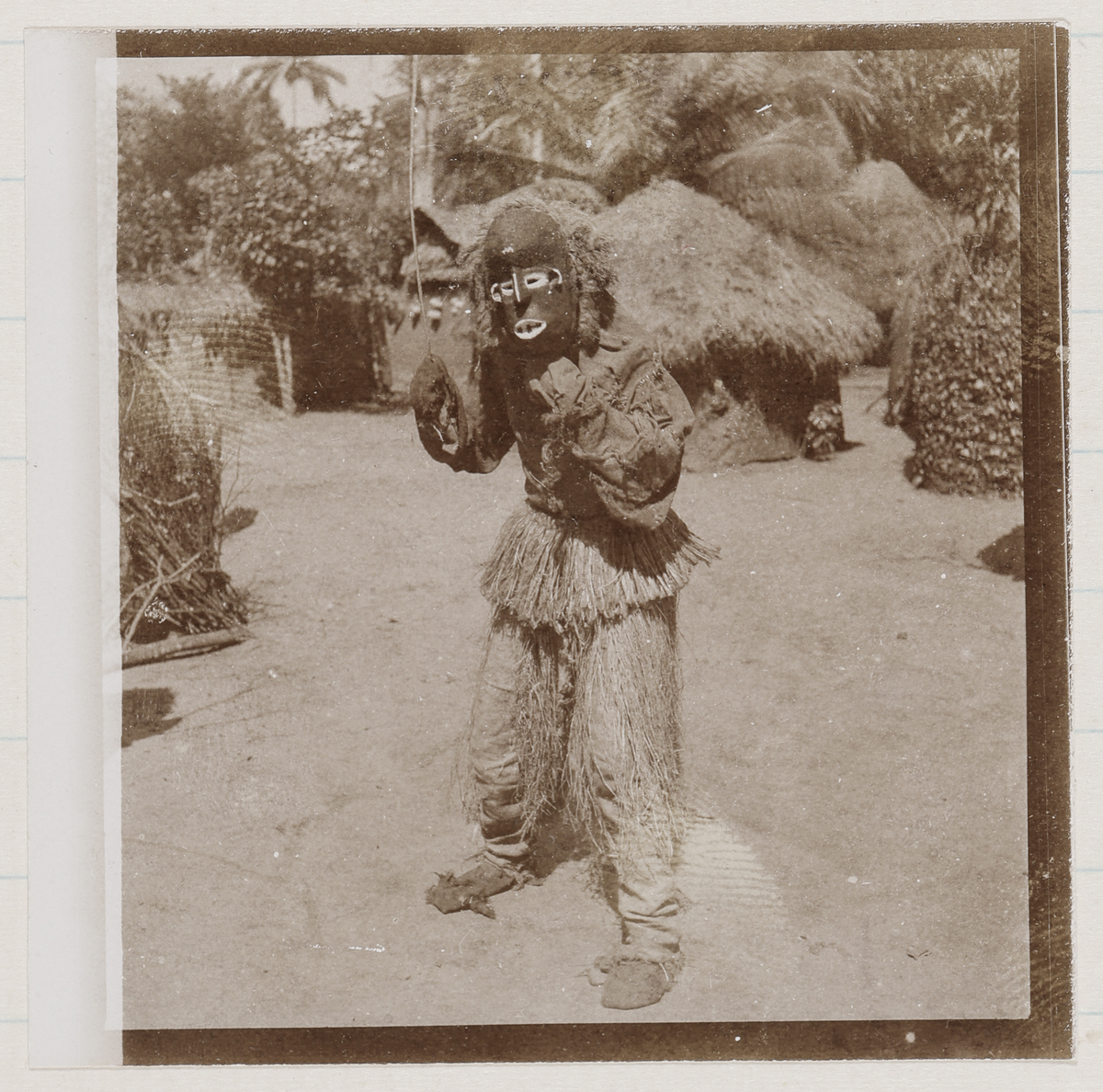
The Mau masquerade was typically performed during the dry season, usually in December. Performers used voice disguisers to speak in ghostly voices while dancing and miming. According to the Ogbugulu Mau Masquerade, Amuda Village record, the full ensemble featured figures representing familial roles, including a mother, grandmother, and daughter.
Onyeka Nwokike
Sep 20, 2026
While this archival image is monochrome, the masks and costumes were originally brightly colored. As noted in a Museum of Archaeology and Anthropology exhibit, these featured geometric patterns and lines. Performers such as Nwaogho Ehi (Heifer) wore brightly colored harlequin-like appliqué costumes, cloth cloaks, and ankle-rattles made from seeds, as documented in Ogbugulu Mau Masquerader Performing in Amuda Village.
Onyeka Nwokike
Sep 20, 2026
The documentation of this mask is part of a larger study on secret societies and their masquerades conducted by G.I. Jones, which was later detailed in his 1984 publication, The Art of Eastern Nigeria, as cited in the Museum of Archaeology and Anthropology record P.171133.GIJ.
Log in to add context.
Explore Further
Discover related books and stories to deepen your understanding.

Art of Eastern Nigeria
By G.I. Jones

Igbo Art And Culture: And Other Essays
By Simon Ottenberg

Under the Udala Trees
By Chinelo Okparanta

Americanah
By Chimamanda Ngozi Adichie

THE INDIGENOUS PEOPLE OF IGBOLAND: A Captivating Guide to the …
By Vivian Chibuife

Igbo Arts: Community and Cosmos
By Herbert M. Cole and Chike G. Aniakor

Igbo (Visions of Africa Series)
By Herbert M. Cole

Anthropological Report On The Ibo-speaking Peoples Of Nigeria, Part 6 …
By Northcote Thomas

Freshwater
By Akwaeke Emezi
You May Also Like
Agbhogho Mmanwu Maiden Mask
Family Group Portrait by William Henry Crosse
By William Henry Crosse
Dancer Wearing Fish Mask
By G.I. Jones
Landscape of the Niger River
By William Henry Crosse
Temporary Wooden Bridge over the Imo River
Aro Women
By Rev. William T. Weir
Aja Ǹgwùlù (Entrance to an Igbo Compound)
By Herbert Wimberley
Iro Ekpetu of the Ogbugulu Mau Masquerade
By G.I. Jones

An Igbo couple from Asaba
No comments yet. Be the first to share your thoughts!