
Portrait of an Igbo Woman Clerk in Maiduguri
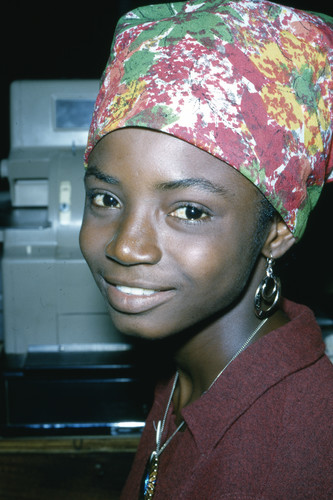
A photograph depicting a young Igbo woman employed as a clerk in Maiduguri. The subject is shown in a three-quarter profile, facing left, with a smile. She wears a multicolored, mottled textile head wrap with red, green, yellow, and white pigments, large metallic-toned hoop earrings, and a metallic-toned chain necklace with a rounded dark pendant. Her garment is burgundy with a visible collar. The background is an indoor setting with low ambient light, featuring a blurred mechanical or electronic device with a display screen. The image was captured in September 1966 using a Kodachrome transparency process.
Community Notes

Onyeka Nwokike
Sep 20, 2026
The image was captured by Edward Shearman Ross (1915, 2016), an American entomologist and curator at the California Academy of Sciences who specialized in close-up photography and authored Photography for Scientific Publication, A Handbook in 1966. According to his California Academy of Sciences CV, Ross was on a six-month motorized expedition through most West African countries and south to Cape Town via Cameroon, Angola, and Namibia during 1966.
Onyeka Nwokike
Sep 20, 2026
The date of the photograph coincides with the peak of the 1966 anti-Igbo pogroms in northern Nigeria. As detailed in Wikipedia, these widespread massacres reached a peak after September 29, 1966. Historical Nigeria states that between 10,000 and 30,000 Igbo people were killed in the Northern Region during September 1966, leading roughly one million people to flee to the east. Eyeway News identifies this violence as the catalyst for the birth of Biafra eight months later.
Onyeka Nwokike
Sep 20, 2026
The photograph is held by the Pitt Rivers Museum at the University of Oxford. While the museum is widely recognized for its anthropological object collections, it also contains a smaller, specialized archive of materials relating to Nigeria.
Log in to add context.
Explore Further
Discover related books and stories to deepen your understanding.

Efuru
By Flora Nwapa

Idu
By Flora Nwapa

Half of a Yellow Sun
By Chimamanda Ngozi Adichie

One Is Enough
By Flora Nwapa

On Black Sisters' Street
By Chika Unigwe

The Igbo of Southeast Nigeria
By Victor C. Uchendu

IGBANKWU: Sense, Sequence, Significance & Symbolism of Igbo Traditional Wedding …
By M.O. Ene

Chike and the River
By Chinua Achebe
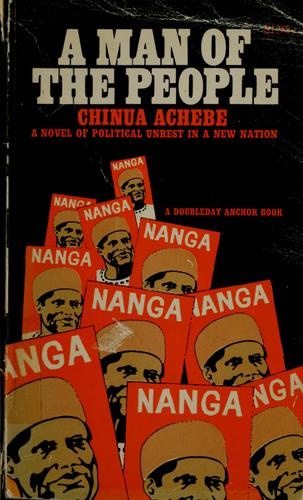
A Man of the People
By Chinua Achebe
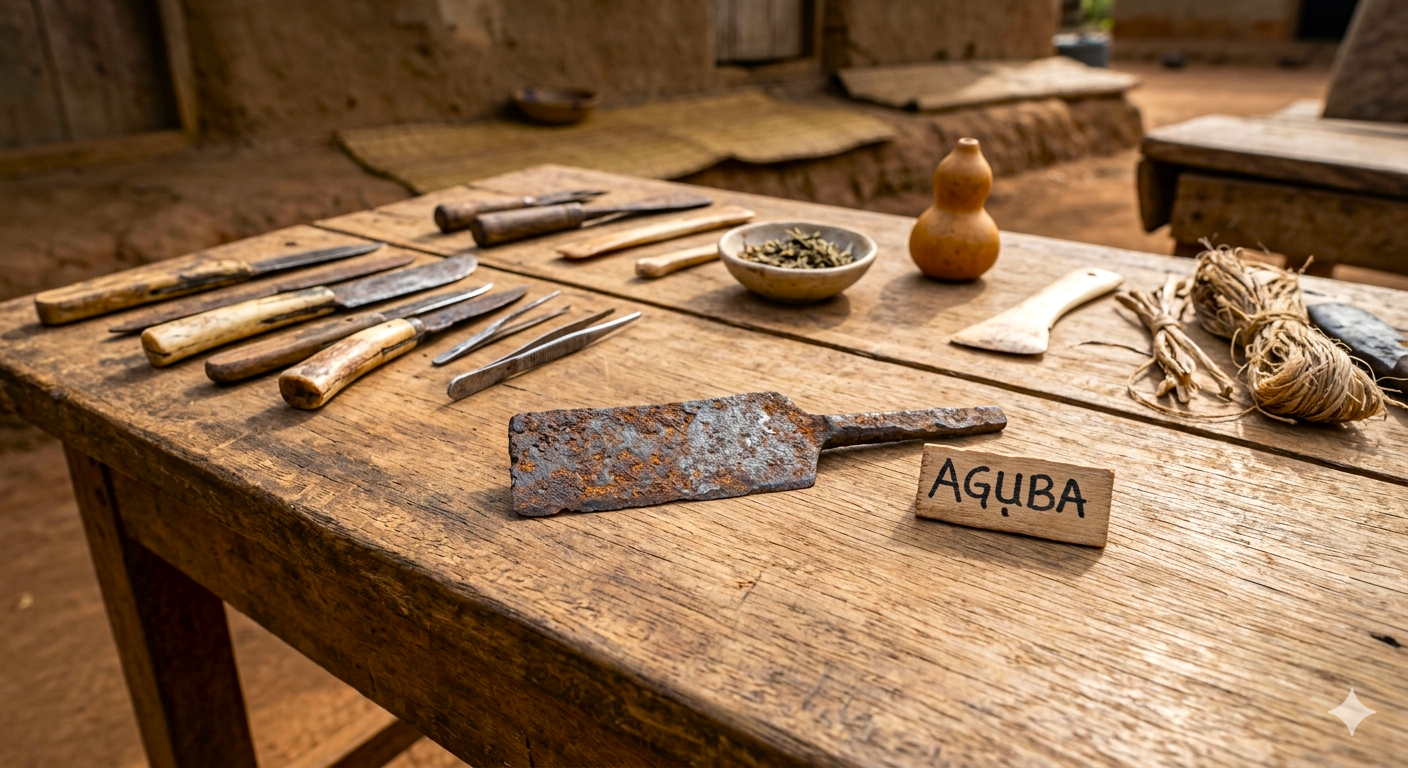
The Igbo, The Placenta, and The Umbilical Cord
By Dandy Ahaoma Ahuruonye
You May Also Like
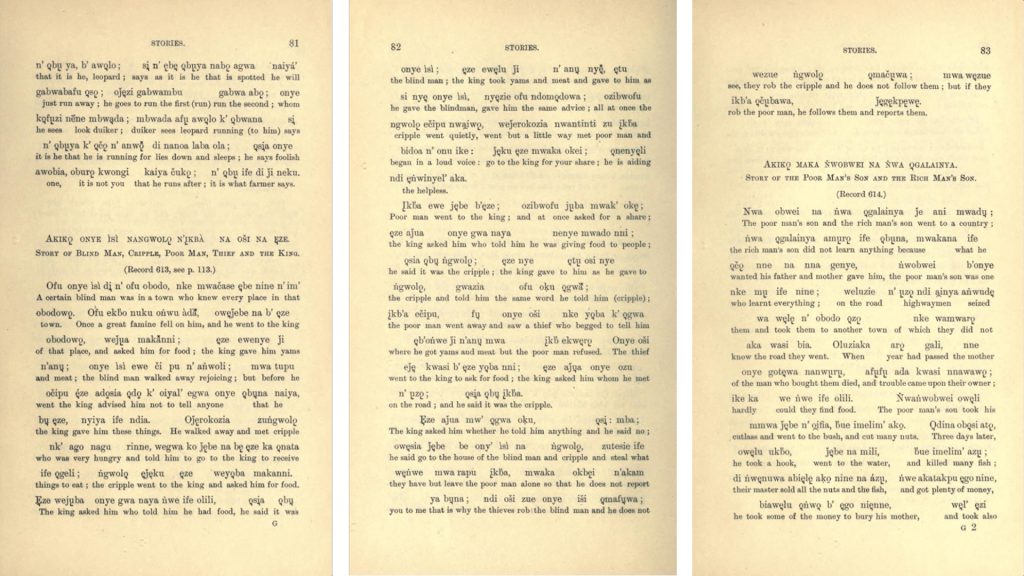
Excerpt from Anthropological Report on the Ibo-speaking Peoples of Nigeria
By Northcote Thomas
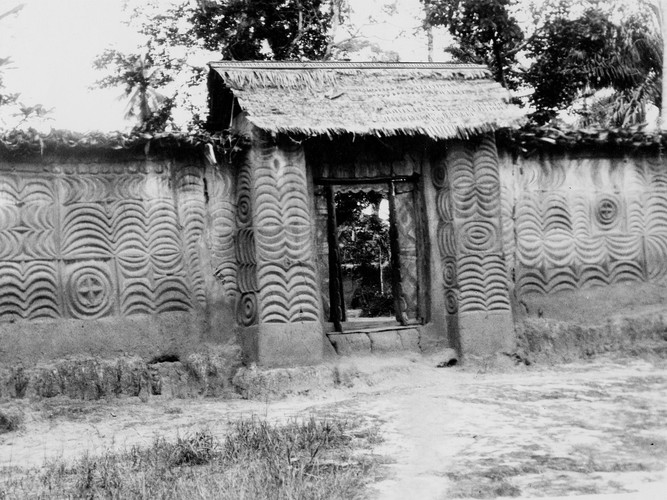
Entrance to an Igbo Farmer's House near Nnewi
By Edward Harland Duckworth
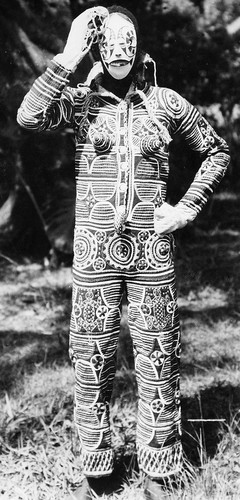
Man in Embroidered Beadwork Canvas Costume and Mask
By Edward Harland Duckworth
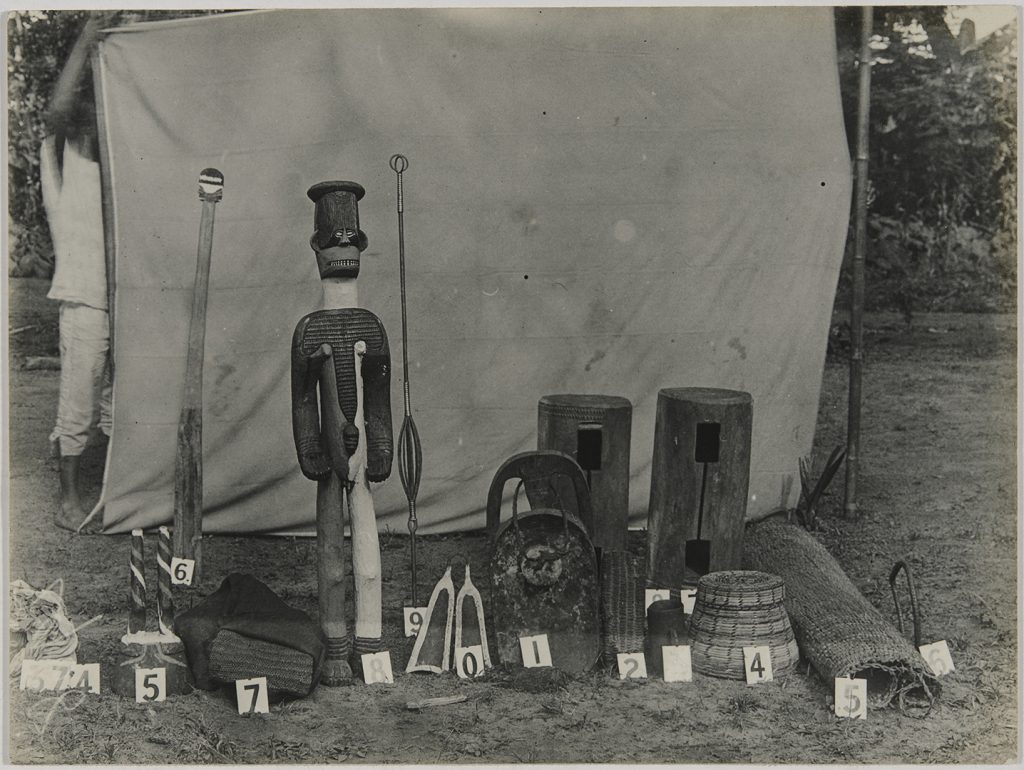
Northcote Thomas Collection: Awgbu Artifacts
By Northcote Thomas
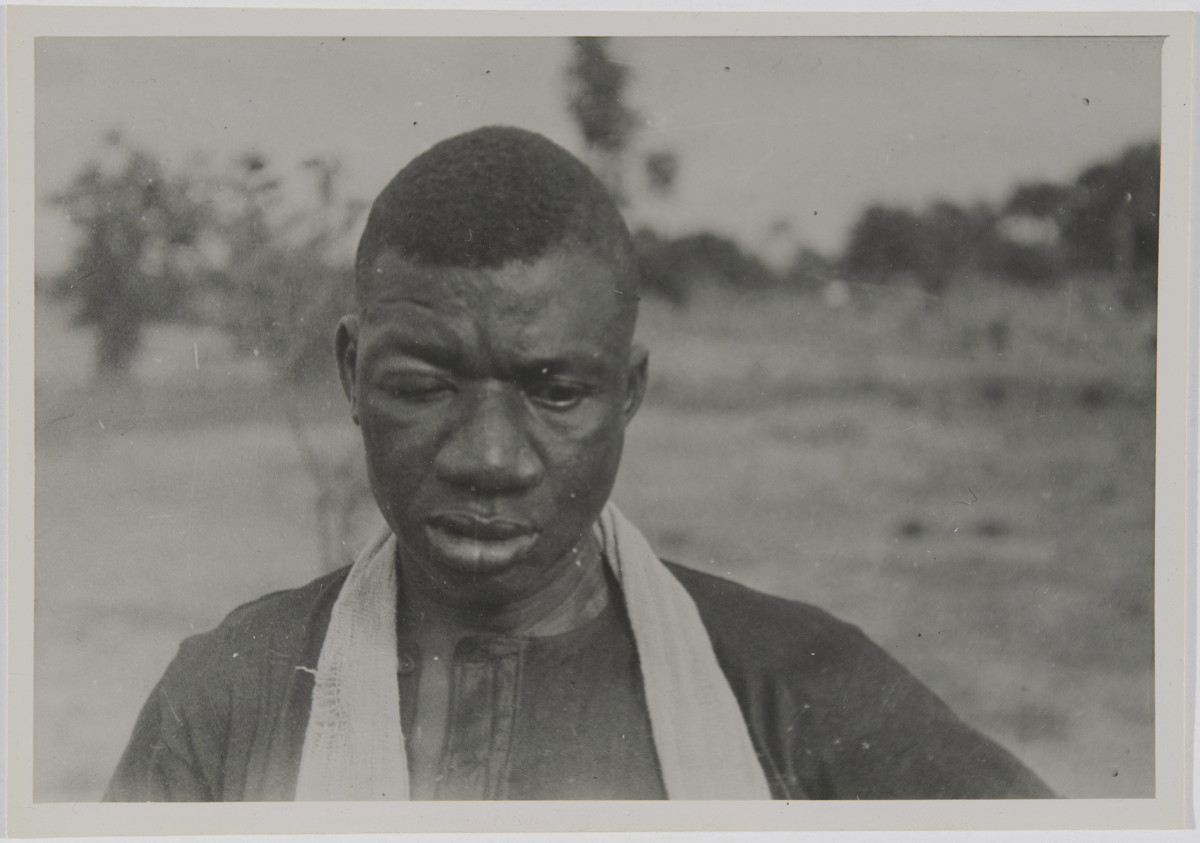
Portrait of a Man with Facial Scarring
By G.I. Jones
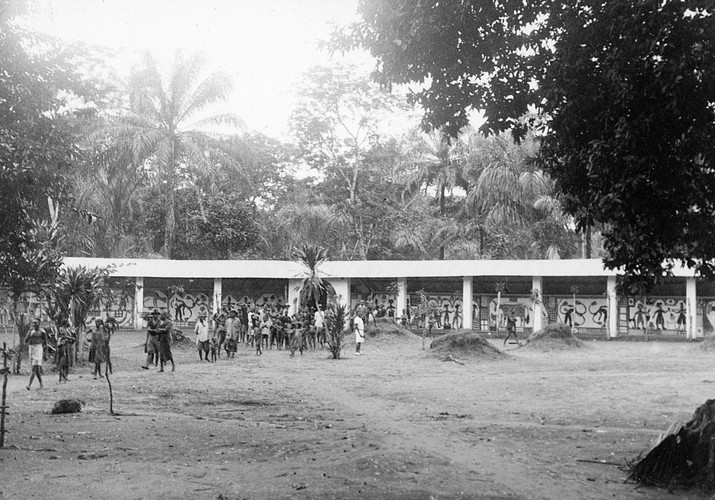
Mural Building at Okwu
By Edward Harland Duckworth
Linguistic Documentation of Igbo Tones and Phrases
By Northcote Thomas
Portrait of a Woman Seated on a Bentwood Chair
By William Henry Crosse
Alose Shrine Figure
By G.I. Jones
No comments yet. Be the first to share your thoughts!