
Ikem Masquerade Play in Umuahia
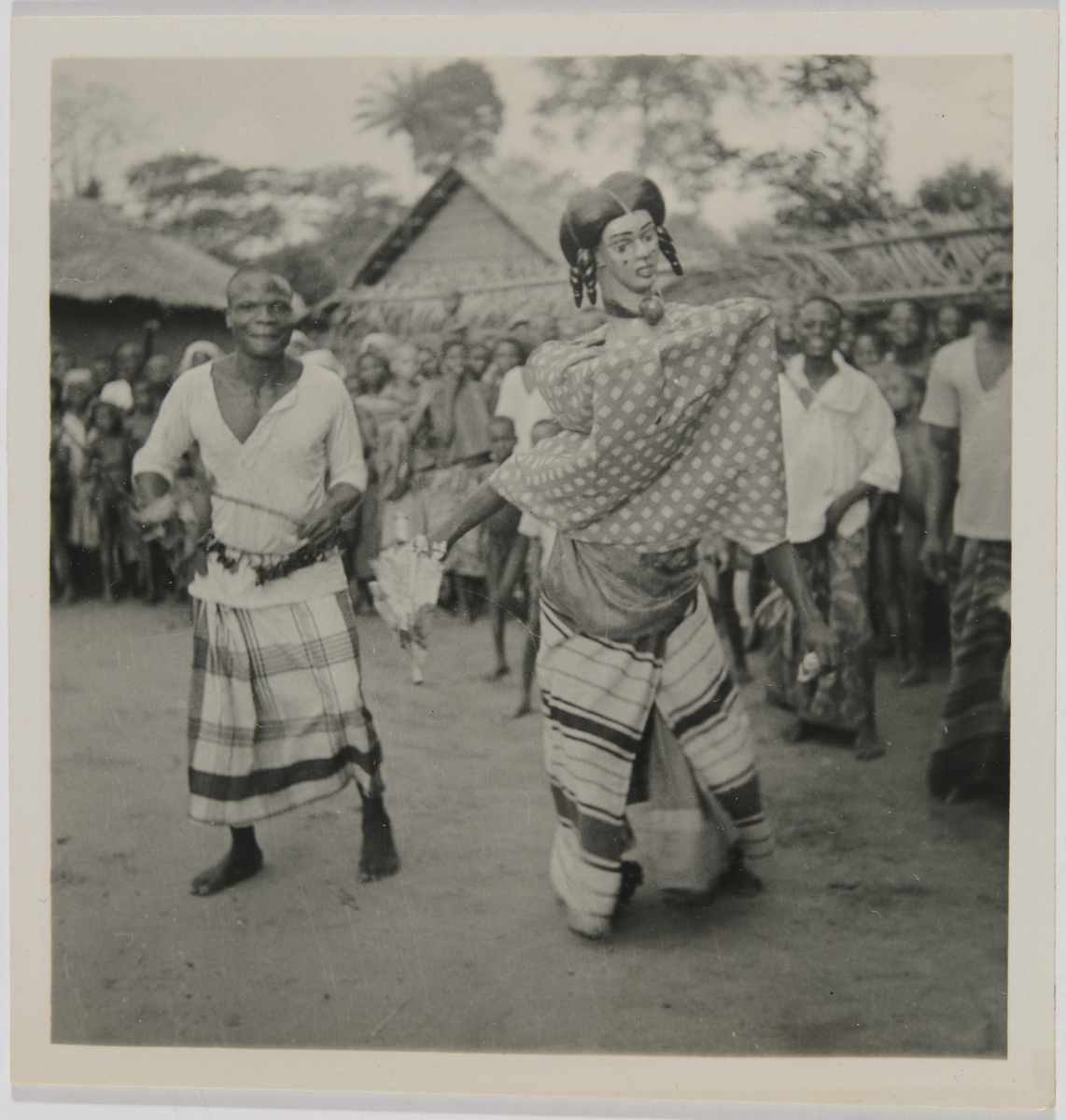
A black-and-white photograph depicting an Ikem masquerade play. The central figure is a masquerader wearing an Anang carved female face mask featuring naturalistic human features, dark eyebrows, a fine nose, and marks on the cheeks, topped with an elaborate black coiffure in large plaits. The mask is mounted over a square frame covered in printed cloth, and the masquerader wears a striped wrapper. The figure holds an umbrella in one hand and a handkerchief in the other. To the side stands a male attendant in a white top and plaid wrapper, holding a musical instrument. A group of spectators is visible in the mid-ground, with thatched houses and trees in the background.
Community Notes

Onyeka Nwokike
Sep 13, 2026
Ikem masquerade societies were established in the 1890s by Efik and Efut residents of Calabar. According to The Metropolitan Museum of Art, the ranks of the Ikem were open to the descendants of enslaved people, which contrasted with the exclusivity of the elite Ekpe society.
Onyeka Nwokike
Sep 13, 2026
The Ikem masquerade and its modified Cross River style diffused from Old Calabar into Ibibio country and the Umuahia area, reaching as far north as Ozu Item. As documented by the Jones Archive, Anang carvers produced skin-covered heads in this style by the early 1930s, which were distinguished from other regional styles by their drooping upper eyelids.
Onyeka Nwokike
Sep 13, 2026
Within the Ibibio group, Anang masks were frequently used to portray beautiful young women. These masks were dedicated to the entertainment parties of the Ekpo company, an ancestor-masquerade society whose masks represent spirits of the dead returning to bless or punish the village, as noted by the African Art Gallery.
Log in to add context.
Explore Further
Discover related books and stories to deepen your understanding.

Art of Eastern Nigeria
By G.I. Jones

Igbo Art And Culture: And Other Essays
By Simon Ottenberg

Igbo Arts: Community and Cosmos
By Herbert M. Cole and Chike G. Aniakor

On Black Sisters' Street
By Chika Unigwe

Under the Udala Trees
By Chinelo Okparanta
Male Daughters, Female Husbands: Gender and Sex in an African …
By Ifi Amadiume

Mbari: Art and the Life Among the Owerri Igbo
By Herbert M. Cole

A Grammar of Contemporary Igbo: Constituents, Features and Processes
By E. Nolue Emenanjo

Igbo (Visions of Africa Series)
By Herbert M. Cole
You May Also Like
Carved Wooden Shrine Object from Aboh Town
By G.I. Jones
An Ekpe Masquerader in Uzuakoli
By G.I. Jones
Man in Embroidered Beadwork Canvas Costume and Mask
By Edward Harland Duckworth
Steam Vessel Anchored on the Niger River
By William Henry Crosse
Group Portrait with Igbo Masquerade Headdress at Fort Salisbury
Ika Igbo Wooden Carvings from the Western Igbo Region
By G.I. Jones
Ogbugulu Mau (Ghost) Masquerade: Iro Ekpetu (Merciless)
By G.I. Jones
Pot believed to hold the personal spirit (chi)
By Percy Amaury Talbot
Group Portrait from Royal Niger Company
By William Henry Crosse
No comments yet. Be the first to share your thoughts!