POLYGAMY: THE WAY OF A CHIEF
POLYGAMY: THE WAY OF A CHIEF
Introduction
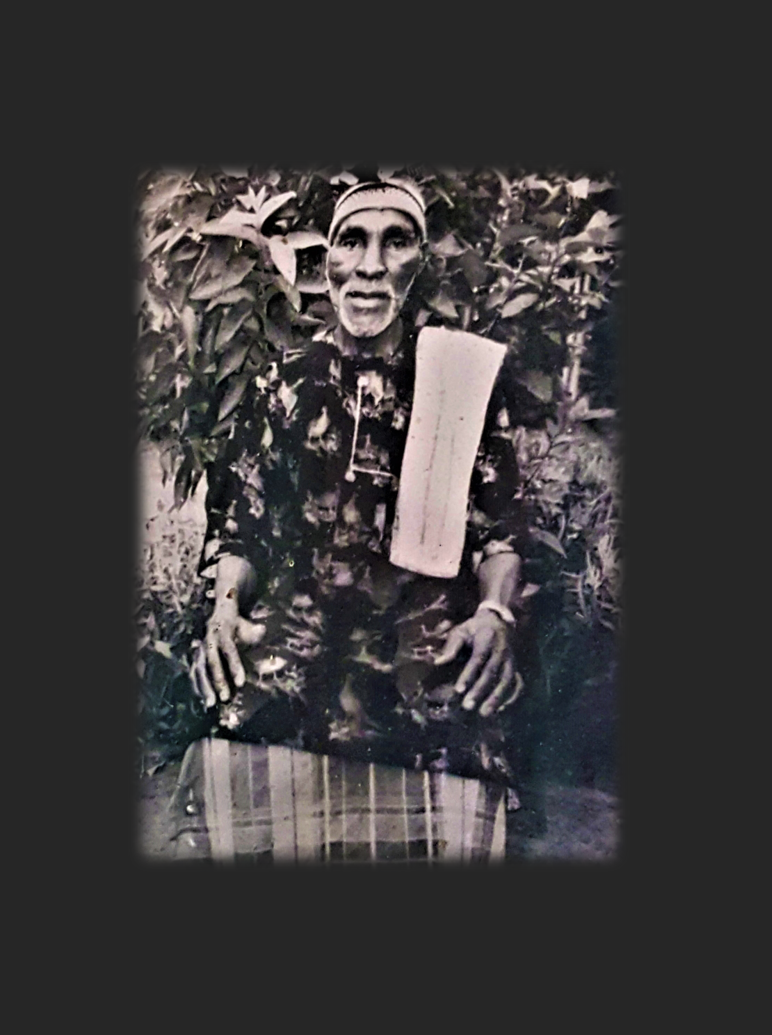
Chief Ikpefu, in keeping with his status and position as a traditional ruler, lived a polygamous life. He married seven wives and also had three concubines; all ten women lived together with him in his enormous compound. This article examines polygamy as practised in the village of Mkpuka, Abia State, Nigeria, through the life and household of Chief Gabriel Ikpefu. It situates his domestic arrangements within local political, ritual and economic structures, and traces the social and intergenerational consequences that followed. The piece is written for readers both familiar and unfamiliar with Igbo culture; it aims to be precise, accessible and analytically sharp while preserving the narrative voice and cultural detail.
Historical and Cultural Context
Polygamy in many Igbo communities was not merely a private marital arrangement; it was an institutionalised element of social organisation. In Mkpuka the chief combined political, spiritual and economic authority: he presided over the Elders’ Council and the General Assembly, and he was the head of the local Juju temple. This concentration of roles made his household a microcosm of the village polity, and his domestic choices had public consequences. Polygamy here functioned as a form of social capital. Marriages and concubinage consolidated labour, secured alliances, and produced heirs who could be mobilised for farming, ritual duties and the reproduction of lineage prestige. Yet the practice also created complex hierarchies within the compound, with the Nnekwu or Alpha Mother occupying a formal seniority that could be contested by other forms of prestige, such as bearing the first male child.
Domestic Economy and Social Organisation
The chief’s compound was an economic unit as much as a household. Land allocations were distributed by the Patriarch before each farming season, and the size of a woman’s plot typically reflected the number of children she had. This system tied reproductive labour directly to subsistence and status.
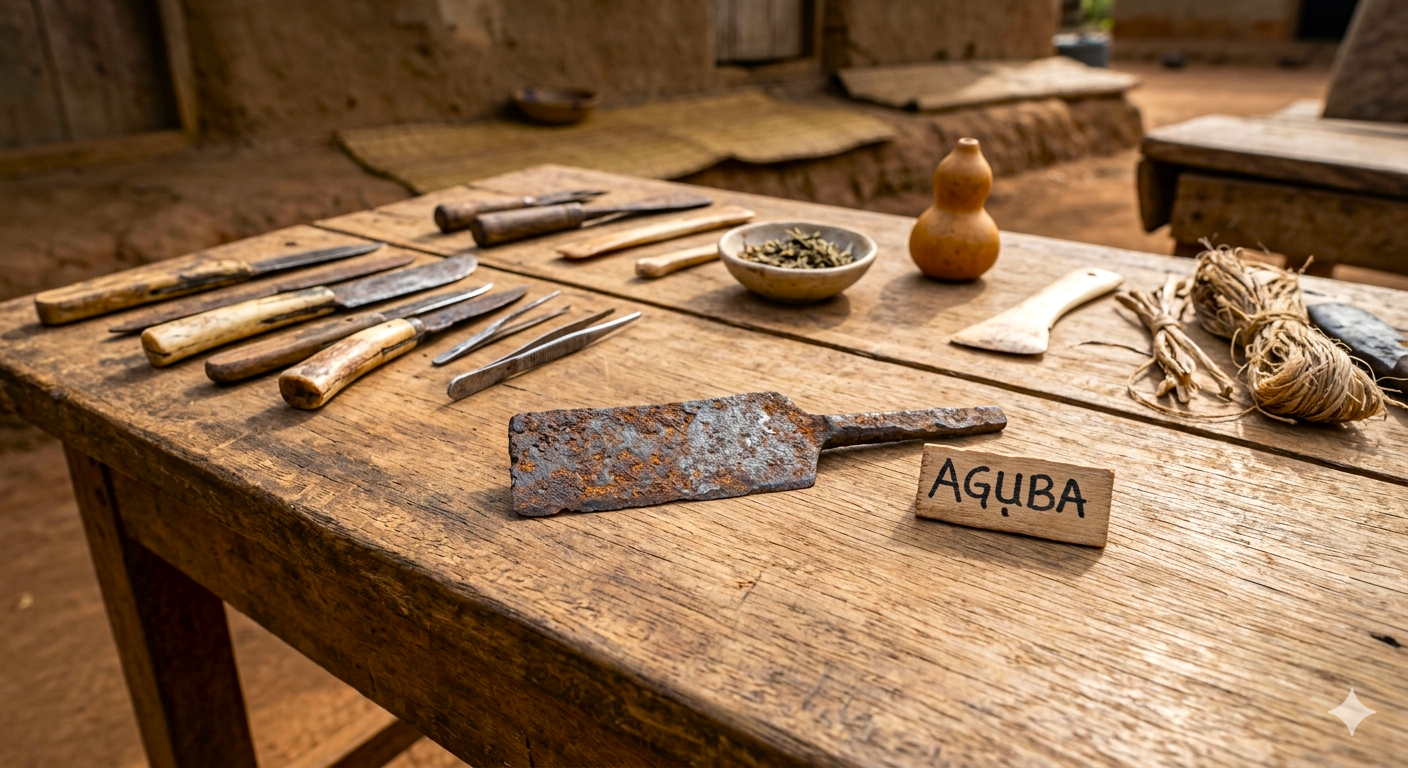
- Labour allocation: All members of the compound were expected to work on the chief’s portion of the farm on an appointed day known as Ehí Ji or Ụbọchi Ji; this collective labour reinforced the chief’s centrality and redistributed food and hospitality.
- Women’s autonomy: Each wife’s Ọnụ Usekwu (Kitchen Gate) represented her personal domain; the produce from her plot funded child‑rearing and household needs.
- Child‑rearing: Despite the chief’s paternal status, day‑to‑day child‑rearing was largely delegated to mothers and senior women; the chief’s role was managerial and ritual rather than domestic.
This arrangement produced a fragile balance. On the one hand, it allowed women to exercise economic agency within their plots; on the other, it made their welfare contingent on the chief’s largesse and the vagaries of intra‑household competition.
Ritual Life and the Politics of Visibility
Ritual days, especially Ehí Ji or Yam Day, were pivotal moments when social order and hierarchy were publicly enacted. The planting of the chief’s portion was a festival of labour, food and obligation. Time dilates on such days: the morning light arrives slow and heavy, the air thick with smoke from cooking fires, the smell of palm oil and roasted yam hangs like a promise.
Imagine the scene in slow motion: women arrive with hoes and cutlasses, children trailing; the chief’s men lay out a low table with kola nut and palm wine; a goat is slaughtered; laughter and bargaining rise and fall like waves. For a few hours the compound is a theatre of abundance and authority. The chief circulates, receives homage, and the day’s distribution of food becomes a visible ledger of favour.
A short, imagined exchange, plausible within the compound, helps to animate the power dynamics:
“You will clear the ridge by noon,” the chief says, handing a tuber and a small note of cash. “Yes, my lord,” the woman replies, voice steady though her hands are tired. “We will make the land sing.” Later, in the dusk, another wife whispers to her neighbour, “He kept her for three nights; see how the children laugh at her luck.” The neighbour answers, “Luck is a thin thing here; it can be taken away by a single look.”
These moments of ritual generosity also functioned as mechanisms of control: the chief’s distribution of food and nightly companionship were both reward and instrument of hierarchy. When the yam day event was over, the women were now free to focus on arranging to have their own farmlands cultivated.
Consequences of Polygamy: The Case of Chike
Chief Ikpefu had many children and one of them was Beji who had a son called Chike; Beji’s mother was Maggie. The narrative of Chike and his father Beji provides a human lens on the long‑term consequences of a large polygamous setting. When Maggie, one of the chief’s wives, died suddenly in 1944, her three sons were left to fend for themselves within a crowded and competitive compound. The chief’s promises of continued support were real in form but limited in practice; the boys had to “toughen up” and cultivate their mother’s plot to survive.
Two structural consequences emerge clearly:
- Dilution of paternal investment. With nearly fifty children, the chief’s attention and resources were necessarily spread thin. Competition among wives for favour translated into uneven outcomes for children.
- Exponential kinship complexity. The demographic multiplication of descendants: grandchildren, great‑grandchildren, creates social distance. The text calculates that one grandchild might have up to two hundred cousins; if each cousin has just two children, the number of kin to be known and supported becomes unmanageable.
These outcomes are not merely numerical; they shape identity, obligation and memory. A child like Chike grows up in a dense web of kinship where intimacy is selective and survival often depends on local alliances rather than paternal protection.
Analysis and Reflection
Polygamy in this account is neither romanticised nor condemned in simplistic terms. It is presented as a culturally embedded institution with both adaptive functions and unintended harms. Several analytical points follow:
- Adaptive logic: In agrarian societies where labour is essential and land is the primary resource; polygamy can increase household labour supply and secure lineage continuity.
- Gendered labour and agency: Women exercise agency through land management and household economies, yet their security depends on the chief’s allocations and the shifting politics of favour.
- Intergenerational risk: Large polygamous households can produce demographic cascades that strain resources and social cohesion across generations. The chief’s prestige may not translate into durable welfare for all descendants.
For contemporary readers, the Mkpuka case invites a nuanced view: polygamy must be understood as a social technology that solved certain problems while creating others. Any modern policy or social intervention should therefore be attentive to the local economic logics, gendered labour patterns and the long‑term kinship effects documented here.
Conclusion
The story of Chief Ikpefu and the children at Mkpuka is a vivid case study of how polygamy operates at the intersection of ritual, economy and kinship. It shows how a single household decision of marrying multiple wives and retaining concubines can ripple across decades, shaping livelihoods, social memory and the texture of everyday life.
Key takeaway: Polygamy in this context functioned as a pragmatic social arrangement that reinforced the chief’s authority and supplied labour, but it also produced structural inequalities and long‑term burdens for descendants. Any contemporary engagement with polygamous systems must balance respect for cultural forms with careful attention to their social consequences.
– Dandy Ahuruonye
Dandy Ahuruonye is an Igbo writer and cultural advocate whose work spans fiction, children’s literature, technical guides and major anthologies of Igbo proverbs and Igbo Artifacts.