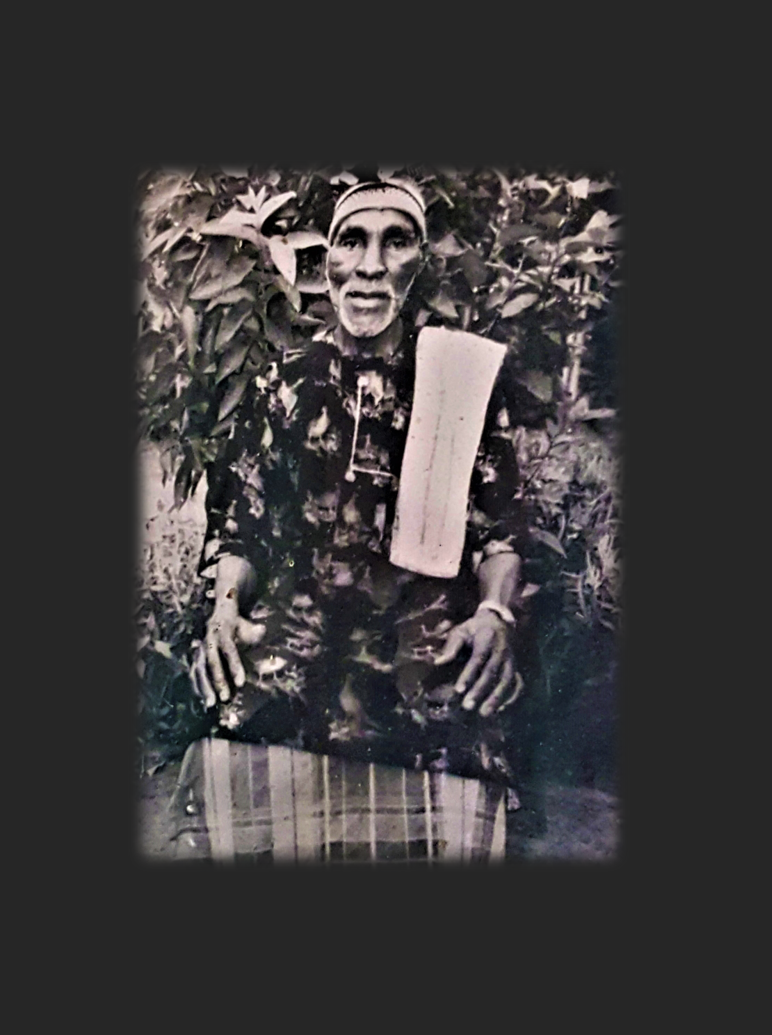
ÒSU – A BROKEN AND DAMAGED CLASS AMONG THE IGBO PEOPLE
ÒSU – A BROKEN AND DAMAGED CLASS AMONG THE IGBO PEOPLE
Introduction
In the tropical rainforest, the caste system was a hierarchical split, mostly between the Diala and the Òsu dichotomies. It was a complicated philosophy where the Diala, generally regarded as the freeborn and authentic right-handed sons of the soil, were regarded as superior to the Òsu. Consequently, the Diala were the masters in the community. They categorised themselves as the sons of the land or Mother Earth and so enjoyed all the privileges that accompanied legitimate progeny. They banished the Òsu as outcasts and looked upon them as highly inferior in contrast to the Diala. Therefore, the Òsu caste system is arguably the Igbo nation’s definitive take on the apartheid dogma.
The Òsu had no access to the communal land; instead, they were given small reservations, often very close to, or around, the local shrines. They lived in very deplorable conditions and suffered extreme segregation and were forced to carry out jobs viewed as ritualistic pollutants for the Diala. These so-called ‘untouchables’ remained caught up in this vicious cycle, where the Diala perceived them to be a ‘dirty’ or ‘polluted’ class of people simply by either their birth or social stigmatisation. They created these social categories to promote bigotry and prejudice against those forced to remain outside their exclusive groupness. The Diala refused to have anything to do with Òsu, except on occasions when the Òsu carried out menial duties for them.
Therefore, the Òsu tag was man-made.
The decisions in the wider community about whether certain persons were Òsu often changed the way many in the village felt about them. This affected the way the general community interacted with and behaved towards them. Therefore, it was a creation born out of how others perceive a person because of his looks, lifestyle, occupation, or status in the community. Some became Òsu simply because they had some deformity. Once the Diala successfully impressed this indelible mark on a person, they could exclude him or her from most social interactions in the village. The reason behind this was often because the Diala craved purity and therefore wanted to avoid the perceived pollution that any interaction with those outside his ‘pure’ group might bring upon him. That is why any Diala who married an Òsu was perpetually ostracised in the village. Through such marital alliance, he could also become part of the Òsu caste.
Òsu occupied the bottom-most level of this rigid caste system. Members of this group were broken, discriminated against, and shattered. Given all its intricate practices, this was arguably a form of hidden apartheid, and could easily have been worse than what existed in South Africa. The caste system, designed to isolate and mistreat the ‘untouchables,’ had ensured that they segregated these unwilling victims of social classification from the mainstream. They forced them to look after dirty and demeaning jobs. The consensus was that these ‘accursed’ people should be banished and must face the wrath of the evil spirits that the shrines were meant to fight against.
Their seclusion was not only social but also included religious and economic apathy. After a person had been effectively branded an ‘untouchable,’ he could never escape this tortured ordeal that holistically affected his very being until death. Members of the Òsu had no permission to draw water from common wells used by the villagers. Even on the religious front, they were not allowed entry into any shrine or temple in the land. In one village, while they eventually built a small school soon after the arrival of European explorers, they forced Òsu children to sit at the very rear of the classrooms.
Becoming or being branded an Òsu could happen very easily and suddenly.
Once a Diala started some gossip or speculation about a certain person whom he disliked, the rumour mill went into full motion; then it was often only a matter of time before the Òsu label stuck, and soon, all the Diala would eventually avoid that individual. To illustrate, one morning, a group of children met in the village square as they all ran around chasing each other while others played hide and seek. Moments later, one of the kids who had been hiding in the undergrowth came out of his hiding with a small, live snake dangling from his hand. He had found the small serpent whilst hiding from fellow kids and wanted to use it to scare them. He held the small animal by the tail with its head swimming and surfing in the air in a self-defensive attempt to strike anyone within reach. The moment he came out with this dreaded creature in his hand, there was an instant commotion as many of the children became frightened and consequently ran for their lives. As they escaped the scene, some of them were shouting:
“Òsu! Òsu!”
The confused boy just stood there, watching as his supposed friends all ran in different directions. They all became intrigued by what they viewed as the little boy’s ability to demonstrate that it was possible to hold a living snake without being harmed. From that moment on, many village kids branded the boy Òsu. When something like this happened, the target individual or family had to fight vigorously to do away with the tag and stop the prejudice. If they failed in this bid, then the chip stuck and they would become part of Òsu. At other times, the Diala might conclude that some individuals were exhibiting some odd traits – perhaps because of the way they dressed or spoke – and that would be enough to pigeon-hole them as Òsu in the community. This explains why it was easy for such peculiar ones to be viewed in some quarters of their community as belonging to this groupness.
The Diala hated, excluded, and reproached Òsu, and denounced individuals from this group as evil for the sake of the indelible tag that was albeit imposed on them by the Diala himself.
While the Diala enjoyed full recognition and the instant protection that came with it, the Òsu could only dream of such largess as being allowed to intermarry with others in the land. They could not visit the community market to buy or sell. If the villagers perceived a Diala as being conspicuously sympathetic to the Òsu, then he risked being branded an Òsu himself. Therefore, every Diala in the land meticulously toed the fine line of this exclusion as outlined by the community regarding who was and was not a member of this group. The social order of discrimination made it such that a Diala had to eat, drink, and socialise only with other Diala. The Òsu must do the same and only mingle among their own. The so-called thoroughbred, who was also freeborn and therefore the authentic progeny of the land, had to do all in their power not to dilute or desecrate this presumed pureness.
The Emancipation Of Òsu
The caste realities among the Ngwa (Ńgwà) and other Igbo groups meant that the Òsu lived in perpetual fear; the kind of dread that does not go away. They woke up each morning knowing that this new day was going to be the same as the previous. They lived their lives in absolute apprehension as they constantly anticipated further ill-treatment from those ‘superfine’ members of the wider community.
Yes, they lived in relentless trepidation as a result of the daily realities of their ostracism.
It is glaringly clear that those who behaved like the Diala in the native communities could have made a different choice, knowing fully well that any choice they made affected those who were mistreated among them – either for good or for bad. Those who felt superior and discriminated against others do not deserve to live in today’s free world, because everyone who has lived through the humiliation that comes with discrimination – whether fair or unfair – obviously knows that such mistreatment was due to prejudice.
In some societies, many are kept apart because of certain unpopular attributes. However, with the Òsu, their mistreatment was not because of the colour of their skin, their religion, financial status, their age, or gender. Simply put, they were victims of deliberate obliviousness. The perpetrators failed to realise that when they mistreat a person from time to time, it often leads to him living with circadian worry. He is excruciatingly aware of the potential realities of the groupness that prevail among the majority. Often when one encounters a group of people that seem different from him, this person may become concerned that such ones might look at him with evil intent. That is why many from a unique background often have a measure of anxiety at social gatherings; because of that inescapable self-consciousness that continuously reminds them that they are different.
There is no sincerer fear than the fear of being rejected by a dominant group.
Either on a collective or an individual level, prejudice springs from having predetermined opinions about a person or an idea. Those with such lopsided estimations cook the facts to help them feel at ease with the hateful principles they espouse and endorse. When people develop this sort of consciousness, it prompts them to elevate their caste above all others. They place so much emphasis on the promotion of the culture and ideals, as well as the interest of their cluster, often to the detriment of all others.
All forms of groupness potentially divide a community into mutually intolerant elements which make people feel they were Diala, royal, prosperous, wiser, better, or otherwise more outstanding than everyone else. Such notions made some who observed the rigid caste system develop inordinate self-importance. They became prone to feeling superior to those who were not Diala. The problem here is not just the caste system itself, but that some individuals developed feelings of disparagement towards other classes viewed as insignificant because of their being uneducated and materially poor. One of the outstanding reasons was that most Diala, or those with great airs because of their perceived self-importance, gave recognition to the propagandas that elevated their own group, while gravely maligning the Òsu and others as undesirables. Therefore, as their pain-filled life had very few social privileges or rights, these so-called paupers dreamed of a fairer civilisation, a society where people treated them like everyone else. Sadly, for some minorities among the old Igbo communities, such a dream was nothing more than a hallucination; an abstract utopia that did not exist.
But as time moved on, the Òsu gained some relief, especially those that lived among the Ńgwà of the rainforest region in the South East. The easing of their suffering was mainly because of vigorous campaigning by some from this caste who eventually became rich and powerful across the Igbo society and beyond. In the 1980s, it was no longer uncommon to see some Òsu who had gained admissions at local universities and completed a degree or graduate studies.
These individuals grasped early on that they needed to come together.
As a group, they set out to do something about the destructive segregation that had kept them, as the so-called Òsu, at the very bottom of the social standing. As many of them had secured jobs and positions of sway, they started a crusade against the forbidding abuse they had suffered throughout their lives. They tried to raise awareness by insisting that their perpetual exploitation should no longer be allowed to have a place in 20th-century Nigeria, which was perceived to be an inclusive nation.
For any Òsu who had gained a proper third-level education, all he had to do was to slip out and look for a job in another town far away from his community. Many of these brave men and women did so. Eventually, some became college or university lecturers, others became bank managers and lawyers, and still others became engineers and politicians. From such positions of sway, they changed public opinion about the caste system. Their deliberate effort by employing publicity and education created a sustained awareness among the citizenry. This eventually led to the reduction of prejudice against them.
Soon enough, some newspapers began to publish articles that were Òsu friendly; while radio stations broadcast programmes that decried the adversity suffered by this and other marginalised groups. Historians unanimously agree that these people did nothing wrong; they were simply victims of prejudice and malicious gossip. Otherwise, why was it easy for somebody to be turned into an Òsu just because one day a member of the village set out to spread rumours against him? Why is it that no one has ever come up with any tangible proof of what these people did wrong to merit the devastating treatment that has kept them secluded from the mainstream?
It was common for some villages to assert that the Òsu were head-hunters.
The perception was that these people laid an ambush on deserted roads or deep in the bushes and killed their victims before selling their body parts to witch doctors and medicine men or women. Then one wonders why these local herbalists did not receive the same treatment as the Òsu. The reason was that everyone feared the medicine men and women in the community. The villagers assumed that these had special powers from the gods and therefore were not to be meddled with. Consequently, from all indications, it looks like the assumptions against the so-called Òsu were sad, as there was a total lack of evidence to corroborate claims that these people were manslayers. That probably explains why it was easy to remove this seemingly indelible tag within just a few decades. How heartwarming it is to see that people can overcome prejudice and discrimination with the right help.
It would shock anyone who had been away from Eastern Nigeria for a while and now returned to the rainforest for the first time to notice that the term – Òsu – has all but vanished. It is as if the tag had never been part of the psyche of the people. These days, it has become almost impossible to pinpoint who was or was not a member of this group. Thanks to the hard work and diligence of the early pioneers, the Òsu tag has disappeared, not just from the lips of the Ngwa, but also from the hearts of all dwellers of the entire lower Niger areas. The eradication of this caste structure is proof that, with the right persuasion, the human mind can wean itself of discrimination.
As part of the United Nations’ universal declaration of human rights, Article 1 states:
“All humans are born free and equal in dignity and rights. They are endowed with reason and conscience and should act towards one another in a spirit of brotherhood.”
Despite this glowing ideal, class distinction, prejudice, and racism have continued to plague the human species from one corner of the globe to the other. It is saddening to note that similar systems of casting people into a groupness like that of the Òsu prevail in many other parts of the world against people of various backgrounds, races, and social statuses. But why would anyone view his fellowman as untouchable? How could some people regard others as undesirables? All of us have a common ancestry; we all get sick and grow old. We all live for seventy or eighty years – whether rich or poor. Therefore, there is no valid reason really for anyone to prejudge his fellowman or feel superior to him. In many of the Igbo proverbs, the philosophy of inclusiveness and the way the sages discreetly inserted them in those maxims endorsed classlessness; it is our duty to change all of that and welcome EVERYONE. That way, together, we bring this devastating stigma to an overdue end.
- Dandy Ahuruonye