

Guns and Society in Colonial Nigeria: Firearms, Culture, and Public Order
by Saheed Aderinto

Book Author / Creator
The Creation of a 'Gun Society'
Guns and Society in Colonial Nigeria by Saheed Aderinto offers a provocative reassessment of the role of firearms in Nigerian history. While many historians focus on the use of guns in pre-colonial warfare (such as the slave raids or the 19th-century civil wars), Aderinto argues that a true 'gun society'—where firearms became deeply embedded in the daily social, political, and cultural fabric—actually emerged during the colonial period. This book moves beyond military history to explore the social life of the gun, examining how this 'destructive implement of European ingenuity' was domesticated and repurposed by the Igbo and other Nigerian groups.
The Dane Gun as Cultural Object
A central character in this history is the 'Dane gun'—the locally crafted or imported flintlock musket that became a staple of rural life. Aderinto details how the Dane gun ceased to be merely a weapon of war and became a tool for hunting and a ceremonial necessity. The book explores the 'boom and smoke' of gunfire as an essential element of Igbo funerals (for titled men), weddings, and festivals. It explains that the sound of the gun was believed to help the deceased transition to the ancestral world, a practice that linked the foreign technology of gunpowder with indigenous spiritual beliefs.
Regulation and Resistance
The text provides a detailed account of the colonial administration's obsession with regulating firearms. Aderinto analyzes the various Arms Ordinances intended to disarm the population, often driven by the British fear of armed insurrection. He documents the tension between the colonial state, which viewed guns as a threat to public order, and the local population, who viewed the right to own a gun as a mark of manhood and status. The book discusses the 'hunter guard' systems and the illicit trade in gunpowder, showing how Nigerians navigated and often circumvented colonial laws to maintain their access to firearms.
Guns, Class, and Race
Aderinto also examines how guns reinforced social hierarchies. He distinguishes between the cheap Dane guns accessible to the masses and the expensive precision rifles and shotguns that became status symbols for the emerging Nigerian elite and the European colonizers. The book touches on the racial dimensions of gun ownership, where 'leisure shooting' was a privilege often reserved for whites and high-ranking chiefs, while the common man's hunting was heavily scrutinized. This analysis reveals how material culture—specifically the type of gun one owned—served as a marker of class and power in colonial Nigeria.
Legacy of Violence and Protection
Finally, the book connects the colonial proliferation of firearms to contemporary issues of security. By tracing the history of armed robbery and the public's reliance on self-defense, Aderinto provides historical context for the security challenges facing modern Nigeria. It is a rigorous social history that challenges the reader to look at a familiar object—the gun—in a completely new light, revealing its complex role in economy, ritual, and identity.


You May Also Like

Lake Goddess
By Flora Nwapa

Dear Ijeawele, or A Feminist Manifesto in Fifteen Suggestions
By Chimamanda Ngozi Adichie
Toads for Supper
By Vincent Chukwuemeka Ike

Juo Obinna
By Tony Uchenna Ubesie
Encyclopaedia of Igbo Artefacts
By Dandy Ahaoma Ahuruonye

Binti
By Nnedi Okorafor
Sanctificum
By Christopher Abani
The Agwu deity in Igbo religion
By Jude C. U. Aguwa
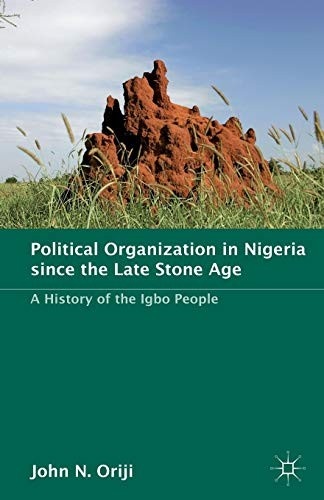
Political Organization in Nigeria Since the Late Stone Age
By John Oriji